India’s No. 1 Online Admission Portal

Apply Now

India’s No. 1 Online Admission Portal Apply Now

careermarg Logo

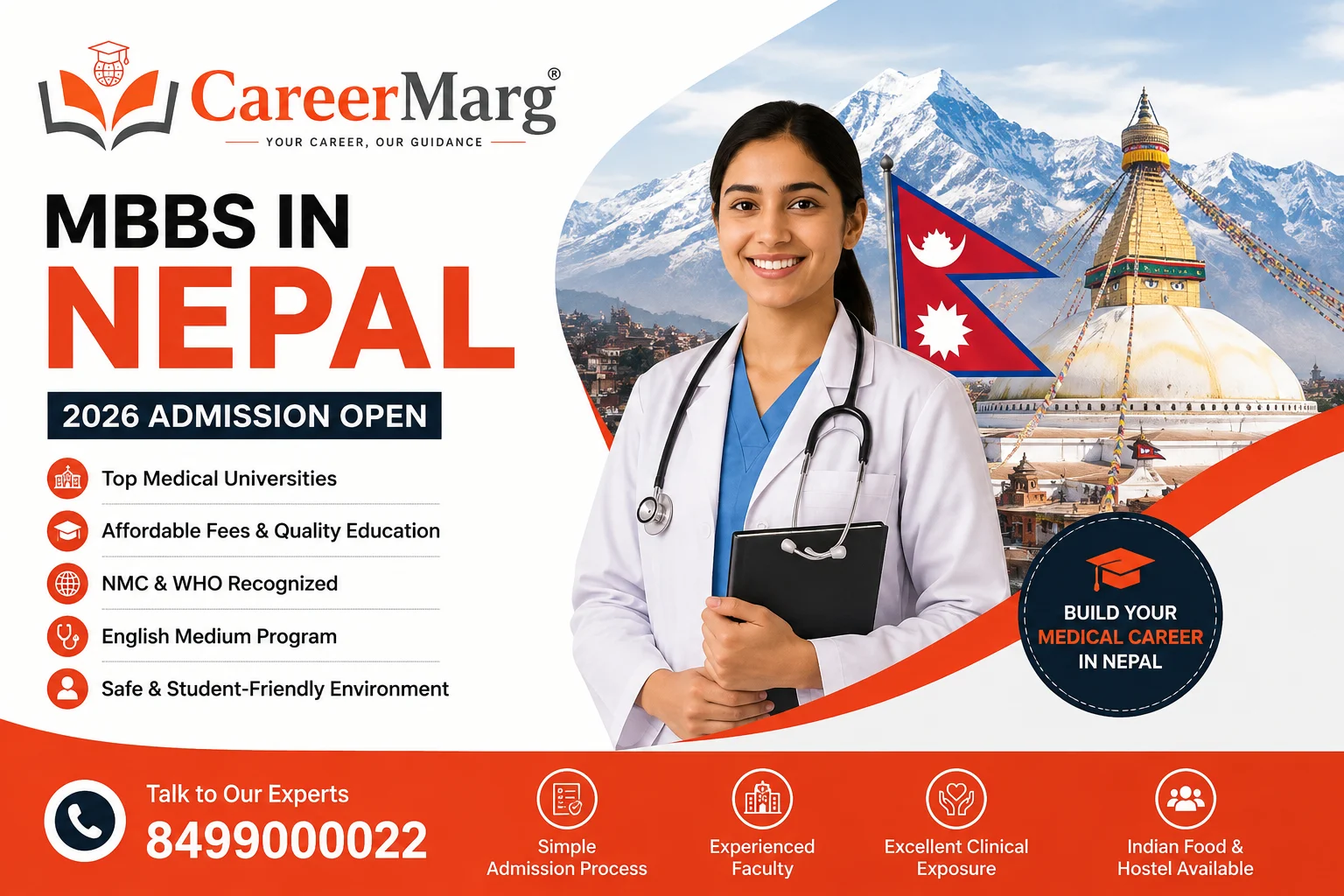
MBBS in Nepal

MBBS in Nepal Expert Guidance With CareerMarg

MBBS in Nepal is one of the most sought-after options for Indian students who want to pursue a recognized medical degree abroad while studying in an academic environment that closely resembles India's healthcare education system. Nepal's medical universities offer structured undergraduate medical programs with extensive clinical training, modern teaching hospitals, and a competency-based curriculum designed to prepare students for professional medical practice and future licensing requirements.

For the 2026–27 admission session, Nepal continues to attract thousands of NEET-qualified Indian students because of its well-established medical education framework, transparent admission process, geographical proximity to India, and internationally recognized medical institutions. Many universities are listed in the World Directory of Medical Schools (WDOMS), and eligible colleges recognized under the applicable National Medical Commission (NMC) regulations allow graduates to pursue medical registration in India, subject to prevailing licensing requirements.

However, selecting the right medical college requires more than comparing tuition fees. Students should carefully evaluate university recognition, academic quality, clinical exposure, internship structure, faculty expertise, teaching hospital infrastructure, admission policies, and long-term career opportunities before making a decision.

This comprehensive guide explains everything Indian students need to know about MBBS in Nepal, including eligibility, admission process, NEET requirements, college-wise fees, seat matrix, top medical colleges, curriculum, hostel facilities, student life, career prospects, and the latest admission updates for 2026–27. Whether you are exploring affordable medical education abroad or comparing Nepal with other popular destinations, this guide will help you make an informed and confident admission decision.

Table of Contents

    Why is MBBS in Nepal Becoming the First Choice for Indian Students?

    For Indian students exploring medical education abroad, selecting the right destination involves more than comparing tuition fees or admission availability. The decision depends on academic quality, university credibility, long-term career opportunities, licensing eligibility, and the overall learning environment. Over the past few years, MBBS in Nepal has become one of the most preferred options because it offers a balanced combination of recognized medical education, structured academic training, and a healthcare ecosystem that closely aligns with the expectations of Indian medical aspirants.

    Unlike many international destinations where students must adapt to a completely different language, healthcare system, or educational model, Nepal provides a familiar academic environment that allows students to focus on developing medical knowledge and professional competencies from the beginning of the course. The country's medical universities emphasize evidence-based learning, ethical medical practice, clinical reasoning, and supervised hospital training, helping students build a strong foundation for future medical careers.

    Another important reason behind Nepal's growing popularity is its accessibility. Convenient connectivity with India, transparent admission pathways, and a supportive educational environment make it a practical choice for students and parents seeking a reliable destination for undergraduate medical education. Rather than being selected only for affordability, Nepal is increasingly recognized for offering a well-rounded academic experience that supports both professional development and long-term career planning.

    MBBS in Nepal 2026 at a Glance

    The table below provides a quick overview of the key facts Indian students should know before applying for MBBS admission in Nepal.

    ParticularDetails
    CourseBachelor of Medicine & Bachelor of Surgery (MBBS)                 
     
    CountryNepal
    CapitalKathmandu
    Course Duration5.5 Years (4.5 Years Academic + 1 Year Compulsory Rotatory Internship)
    Medium of InstructionEnglish
    Eligibility10+2 with Physics, Chemistry & Biology and NEET qualification as applicable
    Minimum PCB Marks50% (General Category) as per prevailing eligibility norms
    NEET RequirementMandatory for Indian students under current NMC regulations
    IELTS / TOEFLNot Required
    Medical Colleges20+
    RecognitionEligible institutions recognized under applicable NMC regulations and listed in the World Directory of Medical Schools (WDOMS)
    Average Tuition Fees₹45 Lakhs – ₹65 Lakhs (Approx.)
    Hostel AccommodationAvailable in most medical colleges
    Indian FoodAvailable at most campuses
    Student VisaNot Required for Indian citizens
    CurrencyNepalese Rupee (NPR)
    Living Expenses₹10,000–₹20,000 per month
    Admission IntakeGenerally One Intake per Academic Year

    Key Highlights of MBBS in Nepal

    Rather than focusing on a single advantage, Nepal offers a combination of academic, practical, and logistical benefits that make it an attractive destination for Indian students pursuing medical education abroad.

    • Competency-based undergraduate medical education.
    • Structured academic progression with integrated clinical learning.
    • English as the primary language of instruction.
    • Well-established teaching hospitals for practical training.
    • Transparent admission framework under university and regulatory guidelines.
    • Convenient geographical access from India.
    • Affordable overall cost compared with many private medical institutions.
    • Multicultural campuses with a significant Indian student community.
    • Internationally recognized medical universities and globally accepted medical qualifications, subject to the regulations of the destination country.
    • Supportive learning environment that encourages academic and professional development.

    Who Should Choose MBBS in Nepal?

    MBBS in Nepal is best suited for students who are looking for a medical education system that combines academic rigor with practical clinical training in a familiar environment. It is particularly suitable for applicants who wish to study in English, value structured hospital-based learning, and are planning their medical careers with a long-term perspective.

    You should consider studying MBBS in Nepal if you:

    • Have qualified NEET and meet the applicable admission requirements.
    • Want to study at a recognized medical university with an established academic reputation.
    • Prefer a curriculum that supports progressive development from basic sciences to clinical practice.
    • Are looking for a destination that offers balanced educational quality and overall affordability.
    • Value practical learning through affiliated teaching hospitals and supervised internships.
    • Prefer to remain close to India for easier travel and family accessibility.
    • Intend to pursue medical licensing or postgraduate education after graduation in accordance with the regulations of your chosen country.
    • Want to study in an environment that minimizes language and cultural adjustment while maximizing academic focus.

    Students who evaluate universities based on educational quality, institutional credibility, faculty expertise, patient exposure, and future career opportunities often find Nepal to be a well-balanced destination for undergraduate medical education.

    Medical Education System in Nepal: Academic Excellence & Learning Framework

    The medical education system in Nepal is recognized for its structured academic framework, competency-based learning approach, and strong emphasis on clinical competence. Medical universities combine foundational sciences, laboratory-based education, clinical skill development, and supervised hospital training to prepare students for professional medical practice. Rather than focusing only on theoretical instruction, the MBBS program is designed to develop analytical thinking, ethical decision-making, communication skills, and evidence-based clinical practice throughout the course.

    Medical education in Nepal is regulated by the Medical Education Commission (MEC), which oversees academic standards, institutional compliance, admission policies, and quality assurance across participating medical institutions. This regulatory framework promotes consistency in undergraduate medical education while ensuring that universities maintain prescribed academic and professional standards.

    Academic Framework of MBBS in Nepal

    The MBBS program follows a progressive learning structure that develops students from foundational medical sciences to independent clinical practice. Each stage of the curriculum builds upon previously acquired knowledge, ensuring systematic academic progression throughout the program.

    Academic StagePrimary Learning FocusExpected Learning Outcome
    Basic Medical SciencesAnatomy, Physiology and BiochemistryDevelop a strong scientific understanding of the human body.
    Para-Clinical SciencesPathology, Pharmacology, Microbiology and Forensic MedicineUnderstand disease mechanisms, diagnosis and therapeutic principles.
    Clinical SciencesMedicine, Surgery and Clinical SpecialtiesApply theoretical knowledge to patient evaluation and treatment.
    Clinical RotationsDepartment-wise Hospital TrainingGain supervised experience in real clinical settings.
    Compulsory InternshipRotatory Clinical InternshipDevelop practical competence and professional confidence.

    Competency-Based Medical Education (CBME)

    Medical universities in Nepal increasingly follow a competency-based medical education model that focuses on developing practical abilities alongside theoretical knowledge. The objective is to prepare graduates who can apply medical concepts effectively in real-world healthcare settings while maintaining high professional and ethical standards.

    The learning approach generally emphasizes:

    • Concept-based medical education
    • Integrated classroom and laboratory learning
    • Case-based discussions
    • Problem-solving exercises
    • Clinical reasoning and diagnostic thinking
    • Evidence-based medical practice
    • Patient-centered healthcare
    • Professional ethics and accountability
    • Continuous academic assessment

    This educational approach helps students understand not only medical theory but also its practical application in diagnosis, patient management, and clinical decision-making.

    Teaching and Learning Methodology

    Medical colleges adopt multiple teaching methods to strengthen conceptual understanding, practical competency, and clinical judgment throughout the MBBS program.

    Teaching MethodPurpose
    Interactive Classroom LecturesBuild strong theoretical concepts.
    Laboratory Practical SessionsDevelop scientific and experimental skills.
    Anatomy DissectionImprove anatomical understanding through hands-on learning.
    Case-Based LearningApply theoretical concepts to clinical situations.
    Small Group DiscussionsEnhance analytical thinking and teamwork.
    Clinical DemonstrationsObserve patient evaluation and treatment procedures.
    Bedside TeachingStrengthen patient communication and clinical assessment skills.
    Simulation-Based Training*Practice clinical procedures in a controlled learning environment.
    Seminars and Academic PresentationsImprove communication, presentation and research skills.

    *Availability of simulation facilities may vary by institution.

    Academic Assessment System

    Student performance is evaluated continuously through internal assessments, practical examinations, and university evaluations. This structured assessment system encourages consistent academic progress while identifying learning gaps throughout the program.

    Assessment MethodPurpose
    Internal AssessmentsEvaluate continuous academic progress.
    Practical ExaminationsAssess laboratory and clinical competencies.
    Viva VoceMeasure conceptual understanding and communication skills.
    Clinical Case PresentationsDevelop diagnostic reasoning and clinical decision-making.
    University ExaminationsAssess subject knowledge and academic progression.
    Internship EvaluationMeasure professional readiness during supervised clinical training.

    Professional Competencies Developed During MBBS

    Alongside subject knowledge, medical education in Nepal focuses on developing professional competencies required for modern healthcare practice. These skills support graduates during internship, postgraduate education, licensing examinations, and future clinical practice.

    • Clinical reasoning and diagnostic thinking
    • Comprehensive patient history taking
    • Physical examination techniques
    • Interpretation of laboratory and imaging investigations
    • Evidence-based clinical decision-making
    • Medical documentation and case presentation
    • Patient counselling and communication
    • Team-based healthcare collaboration
    • Medical ethics and professionalism
    • Time management and clinical responsibility

    Academic Quality Assurance

    The Medical Education Commission (MEC), universities, and affiliated medical colleges collectively maintain academic quality through standardized curricula, institutional inspections, faculty oversight, scheduled assessments, and regulatory compliance. This quality assurance framework promotes consistency in medical education while encouraging continuous academic improvement across participating institutions.

    Quality ParameterAcademic Objective
    Curriculum StandardizationMaintain uniform learning outcomes across institutions.
    Faculty SupervisionSupport academic guidance and student mentorship.
    Teaching Hospital IntegrationStrengthen practical and hospital-based learning.
    Continuous AssessmentMonitor student performance throughout the program.
    Regulatory OversightEnsure institutional compliance with prescribed academic standards.

    How This Academic Framework Benefits Indian Students

    The structured learning model followed by medical universities in Nepal enables Indian students to transition smoothly into undergraduate medical education. A progressive curriculum, competency-based teaching methodology, continuous assessment, and integrated hospital training help students strengthen conceptual understanding before advancing to clinical practice.

    Rather than relying solely on classroom instruction, students gradually develop academic knowledge, practical competencies, clinical reasoning, communication skills, and professional ethics throughout the MBBS program. This balanced educational approach supports long-term preparation for internship, postgraduate education, and medical licensing pathways in accordance with the regulations applicable in the country where graduates intend to practice.

    Nepal MBBS Seat Matrix 2026: College-Wise MBBS Seats for Indian Students

    The Nepal MBBS Seat Matrix 2026 provides a complete overview of seat availability across government and private medical colleges for the 2026–27 admission session. For Indian students, understanding the seat matrix is an important step in shortlisting suitable medical colleges, estimating admission opportunities, and preparing a realistic college preference list based on their academic profile.

    Unlike tuition fees or university rankings, the seat matrix directly reflects the number of MBBS seats offered by each institution, including the allocation available for international applicants. Since foreign-seat availability differs from one college to another, comparing seat distribution before applying helps students expand their admission options and avoid relying on a single institution.

    CareerMarg Admission Insight: During the counselling process, students who prepare a well-balanced preference list using seat availability, university affiliation, budget, and admission trends generally have better admission outcomes than applicants who apply to only one or two colleges.

    Nepal MBBS Seat Matrix 2026 – Quick Overview

    ParticularDetails
    Total Medical Colleges27
    Government / Public Medical Colleges10
    Private Medical Colleges17
    Total MBBS SeatsApproximately 2,635
    Foreign Quota SeatsApproximately 749
    Admission AuthorityMedical Education Commission (MEC) and Concerned Universities
    Seat AllocationMerit-Based as per applicable admission guidelines

    College-Wise MBBS Seat Matrix in Nepal (2026)

    The following table shows the total approved MBBS intake and foreign quota seats available at major medical colleges in Nepal.

    Seat Distribution Analysis

    The overall seat distribution demonstrates that Nepal offers multiple admission pathways through both public and private medical institutions. While government colleges contribute significantly to the country's medical education capacity, most international applicants obtain admission through private medical colleges because they generally offer a larger foreign quota.

    This distribution enables Indian students to select colleges according to their academic performance, preferred university, financial planning, and long-term career objectives instead of competing for a limited number of institutions.

    CategoryGovernment Medical CollegesPrivate Medical Colleges
    Number of Colleges1017
    Total Seat AvailabilityLower Overall IntakeHigher Overall Intake
    Foreign Quota AvailabilityLimitedComparatively Higher
    Admission CompetitionVery HighModerate to High
    Admission FlexibilityLimited ChoicesWider College Options

    Medical Colleges Offering the Highest Foreign Quota Seats

    Students seeking greater admission opportunities often prioritize institutions with a comparatively larger foreign quota. These colleges generally provide more admission flexibility for eligible international applicants.

    Medical CollegeForeign Quota Seats
    College of Medical Sciences65
    Manipal College of Medical Sciences60
    Birat Medical College43
    Kathmandu Medical College43
    Kathmandu University School of Medical Sciences43
    Nepal Medical College43
    Nepalgunj Medical College43
    Nobel Medical College43
    Chitwan Medical College43

    How to Use the Nepal MBBS Seat Matrix Effectively

    The seat matrix should be used as a planning tool rather than simply a list of colleges. Comparing seat availability across institutions allows students to prepare a more realistic admission strategy and improve their chances of securing a seat.

    • Compare colleges based on total seat intake and foreign quota.
    • Prepare multiple college preferences instead of selecting only one option.
    • Consider university affiliation alongside seat availability.
    • Evaluate tuition fees separately from seat distribution.
    • Review previous admission trends before finalizing your preference order.
    • Keep alternative colleges ready during counselling rounds.

    Key Takeaway

    The Nepal MBBS Seat Matrix 2026 shows that the country offers a balanced combination of public and private medical institutions with approximately 2,635 MBBS seats, including around 749 seats for international students. Understanding this distribution helps Indian applicants build a practical admission strategy, identify colleges with suitable seat availability, and make informed decisions during the counselling process.

    Government vs Private Medical Colleges in Nepal: Which Option Is Better?

    Choosing between a government and a private medical college is one of the most important decisions for students planning to pursue MBBS in Nepal. While both categories follow the academic standards prescribed by their respective universities and regulatory authorities, they differ in terms of admission competitiveness, tuition structure, seat availability, institutional diversity, and overall admission opportunities.

    Rather than asking which option is universally better, students should evaluate which type of institution best matches their NEET performance, financial planning, academic expectations, and long-term career goals. Understanding these differences helps applicants build a more practical admission strategy instead of focusing on a single college.

    Government vs Private Medical Colleges in Nepal: Comparison

    Comparison FactorGovernment Medical CollegesPrivate Medical Colleges
    Number of Colleges1017
    Overall Seat AvailabilityLowerHigher
    Admission CompetitionVery HighModerate to High
    Foreign Student IntakeLimitedComparatively Higher
    Tuition Fee StructureLowerHigher
    Choice of InstitutionsLimitedWider Selection
    Campus FacilitiesEstablished InfrastructureVaries by Institution
    Best Suited ForStudents with strong academic meritStudents seeking broader admission options

    Who Should Consider Government Medical Colleges?

    Government medical colleges are generally suitable for students who achieve strong academic performance and are comfortable competing for a relatively limited number of seats. These institutions are often preferred by applicants seeking lower tuition costs and admission through highly competitive merit-based processes.

    • Students with competitive NEET scores.
    • Applicants prioritizing lower tuition fees.
    • Students comfortable with higher admission competition.
    • Candidates seeking admission based primarily on academic merit.

    Who Should Consider Private Medical Colleges?

    Private medical colleges provide a wider range of admission opportunities because they represent a larger share of Nepal's MBBS institutions. They are suitable for students looking for greater flexibility in college selection while considering factors such as university affiliation, academic environment, location, and financial planning.

    • Students seeking more college options.
    • Applicants planning a balanced admission strategy.
    • Students comparing universities based on academic preferences.
    • Candidates looking for greater flexibility during the admission process.

    College Selection Checklist for Indian Students

    Selecting the right medical college requires evaluating multiple academic and practical factors together rather than relying on a single parameter.

    Evaluation FactorWhy It Matters
    University AffiliationDetermines curriculum, examinations and degree-awarding authority.
    Academic ReputationReflects institutional credibility and learning standards.
    Teaching HospitalInfluences practical learning opportunities during the MBBS program.
    Faculty ExperienceSupports academic guidance and professional development.
    Overall Cost of EducationHelps with long-term financial planning.
    Hostel & Student FacilitiesContributes to a comfortable campus experience.
    City & ConnectivityAffects travel convenience and accessibility.
    Internship FacilitiesProvides supervised practical training before graduation.
    Student Support ServicesImproves academic and personal assistance throughout the course.

    How to Make the Right Decision

    There is no single medical college that is the best choice for every student. The ideal institution depends on individual academic performance, financial capacity, preferred university, career objectives, and personal preferences. Comparing colleges across multiple academic and institutional parameters allows students to prepare a realistic shortlist and make a well-informed admission decision.

    Instead of applying to only one institution, students should prepare multiple college preferences that align with their eligibility and overall admission strategy. This approach provides greater flexibility during counselling and improves the likelihood of securing admission to a suitable medical college in Nepal.

    Key Takeaway

    Government and private medical colleges in Nepal each offer distinct advantages. Government institutions generally attract students with highly competitive academic profiles, while private colleges provide a broader range of admission opportunities and institutional choices. Evaluating colleges based on academic quality, university affiliation, teaching hospital facilities, overall cost, and long-term career goals will help students identify the option that best matches their individual aspirations.

    MBBS in Nepal Fees 2026–27: Complete College-Wise Fee Structure

    The MBBS in Nepal fee structure for 2026–27 varies depending on the medical college, university affiliation, and institutional policies. Before applying, students should estimate the complete cost of attendance rather than comparing tuition fees alone. A realistic budget should include hostel accommodation, food, university charges, examination fees, and other essential expenses throughout the duration of the MBBS program.

    For the 2026–27 admission session, the tuition fee at most private medical colleges in Nepal generally ranges between ₹45 lakh and ₹65 lakh. Some government and autonomous institutions may follow fee structures prescribed by the Medical Education Commission (MEC) or their respective universities, which can be notified in Nepalese Rupees (NPR) or US Dollars (USD), depending on the institution.

    Compared with many international medical destinations, Nepal offers a relatively predictable cost structure, allowing students and parents to plan educational expenses with greater confidence. However, the final amount payable may differ based on the selected college, accommodation type, exchange rate, and university notifications issued for the respective admission year.

    MBBS in Nepal Fee Structure 2026–27: Estimated Cost Overview

    The table below provides an approximate estimate of the major expenses associated with studying MBBS in Nepal.

    Expense HeadApproximate Cost
    Total Tuition Fee₹45 Lakhs – ₹65 Lakhs
    Hostel Accommodation₹80,000 – ₹2,00,000 per year
    Food Expenses₹4,000 – ₹8,000 per month
    Living Expenses₹10,000 – ₹20,000 per month
    University Registration FeeAs per university guidelines
    Examination FeeAs applicable
    Medical InsuranceAs per institutional policy
    Estimated Overall Cost₹50 Lakhs – ₹70 Lakhs

    College-Wise MBBS Fees in Nepal for Indian Students (2026–27)

    The following table presents the indicative tuition fees charged by major medical colleges in Nepal. Actual fees may vary depending on the latest university notifications and institutional policies.

    Medical CollegeTotal Tuition FeeApproximate First-Year Fee
    Janaki Medical College₹46,00,000₹23,00,000
    KIST Medical College₹48,00,000₹24,00,000
    Gandaki Medical College₹50,00,000₹25,00,000
    Nepal Medical College₹52,00,000₹26,00,000
    Chitwan Medical College₹52,00,000₹26,00,000
    Devdaha Medical College₹52,00,000₹25,00,000
    Birat Medical College₹53,00,000₹27,00,000
    Lumbini Medical College₹53,00,000₹27,00,000
    Kathmandu Medical College₹54,00,000₹27,00,000
    Nobel Medical College₹56,00,000₹28,00,000
    College of Medical Sciences₹58,00,000₹30,00,000
    Universal College of Medical Sciences₹58,00,000₹28,00,000
    Nepalgunj Medical College₹60,00,000₹30,00,000
    National Medical College₹62,50,000₹32,00,000
    Manipal College of Medical Sciences₹75,00,000₹37,50,000

    What Is Included in the Overall Cost?

    While tuition fees account for the largest share of the overall expense, students should also consider recurring academic and living costs throughout the course. Planning these expenses in advance helps avoid financial challenges during the MBBS program.

    • Tuition fee payable to the medical college.
    • Hostel accommodation charges.
    • Food and daily living expenses.
    • University registration and enrollment charges.
    • Examination and assessment fees.
    • Medical insurance, where applicable.
    • Books, study materials, and personal expenses.
    • Travel expenses between India and Nepal.

    Important Note

    The fee figures presented above are indicative estimates for the 2026–27 admission session. Tuition fees, installment schedules, exchange rates, and institutional charges may change based on notifications issued by universities, the Medical Education Commission (MEC), or individual medical colleges. Students should always verify the latest official fee structure before confirming admission or making any payment.

    Nepal MBBS Entrance Exam (MECEE-BL) 2026

    The Medical Education Common Entrance Examination – Bachelor Level (MECEE-BL) is the national entrance examination conducted by Nepal's Medical Education Commission (MEC) for admission to MBBS and other undergraduate health science programs. Most government medical colleges and many university-affiliated institutions use MECEE-BL as part of their admission process for eligible applicants. :contentReference[oaicite:0]{index=0}

    For Indian students planning to pursue MBBS in Nepal, understanding the MECEE-BL examination pattern, eligibility criteria, syllabus, and marking scheme is essential before beginning the admission process. Since admission policies may be revised for each academic session, applicants should always refer to the latest notification issued by the Medical Education Commission (MEC).

    MECEE-BL 2026 Exam Highlights

    ParticularDetails
    Official Examination NameMedical Education Common Entrance Examination – Bachelor Level (MECEE-BL)
    Conducting AuthorityMedical Education Commission (MEC), Nepal
    PurposeAdmission to MBBS and other undergraduate medical and health science programs
    Examination ModeAs notified by the Medical Education Commission
    Question TypeMultiple Choice Questions (MCQs)
    Total Questions200
    Total Marks200
    Duration3 Hours
    LanguageEnglish
    Negative MarkingAs per the latest MEC guidelines

    Eligibility for MECEE-BL 2026

    Applicants seeking admission through MECEE-BL should satisfy the eligibility criteria prescribed by the Medical Education Commission and the concerned university for the applicable admission session.

    Eligibility RequirementRequirement
    Educational Qualification10+2 or equivalent with Physics, Chemistry and Biology
    Minimum Academic RequirementAs prescribed by MEC for the respective admission year
    NEET Qualification (Indian Students)Required as per applicable National Medical Commission (NMC) regulations
    Entrance ExaminationMECEE-BL, wherever applicable

    MECEE-BL Exam Pattern

    The examination evaluates conceptual understanding of higher secondary science subjects together with logical and analytical reasoning. Questions are objective in nature and designed to assess a candidate's readiness for undergraduate medical education.

    ComponentDetails
    Question FormatMultiple Choice Questions (MCQs)
    Total Questions200
    Total Marks200
    Examination Duration180 Minutes
    Assessment AreasPhysics, Chemistry, Botany, Zoology and Mental Ability
    Merit PreparationBased on applicable MEC admission guidelines

    Subject-wise Marks Distribution

    SubjectMarks
    Physics50
    Chemistry50
    Botany40
    Zoology40
    Mental Ability20
    Total200

    MECEE-BL Syllabus Snapshot

    The syllabus is primarily based on higher secondary science education and focuses on conceptual learning rather than memorization.

    SubjectMajor Topics
    PhysicsMechanics, Heat & Thermodynamics, Electricity & Magnetism, Optics, Modern Physics, Electronics
    ChemistryPhysical Chemistry, Organic Chemistry, Inorganic Chemistry
    BotanyCell Biology, Genetics, Plant Physiology, Ecology, Biodiversity, Applied Botany
    ZoologyAnimal Diversity, Human Physiology, Human Biology, Human Diseases, Evolution, Ecology
    Mental AbilityLogical Reasoning, Numerical Ability, Analytical Thinking, Verbal Reasoning, Abstract Reasoning

    Preparation Tips for MECEE-BL

    • Build strong conceptual understanding of Physics, Chemistry and Biology instead of relying on rote learning.
    • Practice full-length MCQ mock tests to improve speed and accuracy.
    • Revise higher secondary science fundamentals regularly.
    • Allocate dedicated preparation time for Mental Ability and logical reasoning questions.
    • Review previous examination patterns and official syllabus updates before the examination.
    • Follow the latest notifications issued by the Medical Education Commission regarding examination schedules and admission procedures.

    Key Takeaway

    The MECEE-BL serves as an important gateway for admission to MBBS programs in Nepal. A clear understanding of the examination pattern, eligibility requirements, subject weightage, and syllabus enables students to prepare strategically and complete the admission process with confidence. Since examination policies and admission guidelines may be updated periodically, candidates should always verify the latest information through official Medical Education Commission notifications before applying. :contentReference[oaicite:2]{index=2}

    Documents Required for MBBS Admission in Nepal

    Preparing the required documents before the admission process begins helps avoid unnecessary delays during application verification, counselling, and final enrollment. Although the exact document requirements may vary slightly between universities and medical colleges, most institutions request academic records, identity proof, entrance examination documents, and supporting certificates during admission. The Medical Education Commission (MEC) also specifies document requirements during the entrance registration process. :contentReference[oaicite:0]{index=0}

    Students should keep both the original documents and multiple self-attested photocopies ready. If any document is issued in a language other than English, the university may require an officially translated copy as part of the verification process.

    Academic Documents

    Academic records establish a candidate's educational eligibility for MBBS admission in Nepal. Students should ensure that all certificates and mark sheets are complete and consistent before submitting their application.

    DocumentPurpose
    Class 10 Mark SheetVerification of date of birth and academic record.
    Class 10 Passing CertificateProof of secondary school completion.
    Class 12 Mark SheetVerification of qualifying examination marks.
    Class 12 Passing CertificateProof of higher secondary qualification.
    School Leaving / Transfer CertificateRequired by some universities during enrollment.
    Migration CertificateApplicable where required by the admitting university.
    Character CertificateIssued by the previous educational institution.

    Identity Documents

    Applicants must submit valid identity proof to complete admission formalities and institutional verification.

    DocumentPurpose
    Valid Passport or Aadhaar CardIdentity verification for international applicants.
    Recent Passport-Size PhotographsApplication form, student identity card, and official records.
    Candidate Signature (Scanned Copy)Required for online application and document verification.

    Entrance Examination Documents

    Indian students should keep all entrance examination records readily available during admission and counselling. The exact requirements may differ depending on the admission pathway and applicable regulations.

    DocumentPurpose
    NEET Admit CardRecord of participation in the entrance examination.
    NEET Score CardRequired as per applicable National Medical Commission (NMC) regulations for Indian students.
    MECEE-BL Admit CardRequired wherever the entrance examination is applicable.
    MECEE-BL Score CardUsed during admission and merit verification, where applicable.

    Additional Supporting Documents

    Depending on the university and admission category, applicants may also be required to submit additional supporting documents during enrollment.

    DocumentPurpose
    Completed Admission Application FormOfficial application for admission.
    Application or Fee Payment ReceiptProof of payment of applicable admission charges.
    Medical Fitness CertificateRequired by certain universities before admission.
    Equivalence CertificateApplicable where required by the admitting authority.
    Additional Documents (if requested)Any documents prescribed by the Medical Education Commission or the respective university.

    MBBS Admission Document Checklist

    Before submitting your application, verify that all required documents are complete, valid, and readily available.

    ChecklistStatus
    Original academic certificates available
    Self-attested photocopies prepared
    Recent passport-size photographs
    Valid identity document
    NEET documents ready
    MECEE-BL documents (if applicable)
    Application form completed
    Fee payment receipt available
    Medical fitness certificate (if required)
    Additional university-specific documents

    Important Note

    Document requirements may vary slightly depending on the medical college, university, admission category, and the latest guidelines issued by the Medical Education Commission (MEC). Applicants should always verify the official admission notification and document checklist published by their chosen institution before submitting the application.

    MBBS Course Duration & Curriculum in Nepal

    The MBBS course in Nepal is structured to provide a balanced combination of medical sciences, clinical education, and supervised internship training. The program follows a progressive learning model in which students build a strong foundation in basic medical sciences before advancing to clinical medicine and practical hospital-based training. According to the Medical Education Commission (MEC), the MBBS program consists of a minimum of 4.5 years of academic study followed by one year of compulsory rotating internship. :contentReference[oaicite:0]{index=0}

    The curriculum is designed to develop scientific knowledge, clinical competence, professional ethics, communication skills, and evidence-based medical decision-making. Throughout the program, students progress through pre-clinical, para-clinical, and clinical disciplines before completing supervised internship rotations across major medical specialties.

    MBBS Course Duration in Nepal

    The total duration of the MBBS program is 5.5 years, including academic education and compulsory internship.

    Course ComponentDurationLearning Focus
    Academic Study4.5 YearsPre-clinical, para-clinical and clinical medical education
    Compulsory Rotating Internship1 YearSupervised practical training across major clinical departments
    Total Program Duration5.5 YearsAcademic education with professional clinical training

    Year-wise MBBS Curriculum in Nepal

    The curriculum progresses systematically from foundational medical sciences to advanced clinical practice, enabling students to develop medical knowledge before applying it in patient care.

    Academic PhaseMajor SubjectsPrimary Learning Outcome
    First YearAnatomy, Physiology, Biochemistry, Community Medicine, Communication SkillsUnderstand the structure and normal functioning of the human body.
    Second YearPathology, Pharmacology, Microbiology, Forensic Medicine, Community MedicineStudy disease mechanisms, microorganisms, drugs and forensic principles.
    Third YearGeneral Medicine, General Surgery, Pediatrics, Obstetrics & Gynecology, ENT, OphthalmologyApply medical knowledge to diagnosis and clinical patient management.
    Fourth YearInternal Medicine, Surgery, Orthopedics, Psychiatry, Dermatology, Radiology, Emergency Medicine, AnesthesiologyDevelop advanced clinical knowledge and specialty-specific competencies.
    Compulsory InternshipRotational Training in Major Clinical DepartmentsGain supervised practical experience before graduation.

    Assessment Pattern During MBBS

    Student performance is evaluated continuously throughout the MBBS program using theoretical, practical, and clinical assessments. The assessment framework is designed to measure academic progress, clinical competence, and professional readiness rather than relying solely on final examinations.

    Assessment MethodPurpose
    Internal AssessmentsEvaluate continuous academic performance during each phase of study.
    Practical ExaminationsAssess laboratory skills and practical application of medical concepts.
    Clinical ExaminationsEvaluate patient assessment and clinical decision-making abilities.
    Viva VoceTest conceptual understanding and oral communication skills.
    University ExaminationsAssess subject-wise academic competency as prescribed by the university.
    Clinical Logbooks & Case RecordsDocument practical learning and clinical competency development.

    Compulsory Rotating Internship

    The final year of the MBBS program consists of a one-year compulsory rotating internship, which forms an integral part of undergraduate medical education. During this period, students receive supervised training in different clinical departments, allowing them to apply academic knowledge in real healthcare settings while developing professional confidence and clinical competence. The internship structure is prescribed under the applicable university and regulatory framework. 

    Internship RotationTraining Objective
    General MedicineDiagnosis, patient evaluation and medical management.
    General SurgeryPre-operative, operative and post-operative patient care.
    Obstetrics & GynecologyMaternal healthcare and obstetric management.
    PediatricsHealthcare management of infants, children and adolescents.
    OrthopedicsAssessment and management of musculoskeletal conditions.
    Emergency MedicineRecognition and management of medical emergencies.
    Community MedicinePublic health programs, preventive healthcare and community outreach.

    Key Learning Outcomes

    Upon completion of the MBBS curriculum, graduates are expected to possess the academic knowledge, clinical competencies, and professional skills required for undergraduate medical practice and further medical training.

    • Comprehensive understanding of basic and clinical medical sciences.
    • Competency in patient history taking and physical examination.
    • Clinical reasoning and evidence-based decision-making.
    • Professional communication with patients and healthcare teams.
    • Application of medical ethics and professionalism in clinical practice.
    • Ability to participate effectively in multidisciplinary healthcare delivery.
    • Practical experience gained through compulsory rotating internship.

    Clinical Training & Internship During MBBS in Nepal

    Clinical training is an integral component of the MBBS program in Nepal, enabling students to apply classroom knowledge in real healthcare settings under the supervision of experienced faculty and medical professionals. As students progress through the curriculum, they participate in structured clinical postings, bedside teaching, case discussions, and hospital rotations that strengthen their clinical competence and professional judgment.

    The clinical training framework is designed to develop essential medical skills through progressive learning, beginning with observational training and advancing to supervised patient management during the compulsory rotating internship. This systematic approach helps students gain practical experience across multiple medical specialties before graduation.

    Clinical Learning Model

    Medical colleges in Nepal follow a phased clinical education model that gradually increases students' responsibilities while ensuring continuous faculty supervision and competency development.

    Clinical StageLearning ActivityPrimary Objective
    Clinical OrientationIntroduction to hospital systems, medical ethics and patient safetyUnderstand the healthcare environment and professional responsibilities.
    ObservationWard rounds, outpatient clinics and bedside demonstrationsDevelop clinical observation and patient interaction skills.
    Supervised Clinical PostingHistory taking, physical examination and case discussionsApply theoretical knowledge in supervised clinical settings.
    Case-Based LearningClinical presentations, seminars and multidisciplinary discussionsStrengthen diagnostic reasoning and evidence-based decision-making.
    Rotating InternshipDepartment-wise clinical responsibilities under supervisionPrepare for independent medical practice through hands-on training.

    Major Clinical Departments

    During clinical postings and internship, students receive exposure to a broad range of medical specialties, allowing them to understand different aspects of patient care and healthcare delivery.

    DepartmentTraining Focus
    General MedicineClinical diagnosis, disease management and patient evaluation.
    General SurgeryPre-operative assessment, surgical procedures and post-operative care.
    PediatricsDiagnosis and management of childhood illnesses.
    Obstetrics & GynecologyMaternal healthcare, obstetrics and women's health.
    OrthopedicsMusculoskeletal disorders and trauma management.
    Emergency MedicineEmergency assessment, stabilization and acute patient care.
    PsychiatryMental health assessment and psychiatric care.
    DermatologyDiagnosis and treatment of skin disorders.
    ENTManagement of ear, nose and throat conditions.
    OphthalmologyEvaluation and management of eye diseases.
    Community MedicinePreventive healthcare, epidemiology and public health programs.
    AnesthesiologyPerioperative patient care and anesthesia practices.
    RadiologyDiagnostic imaging and interpretation fundamentals.

    Compulsory Rotating Internship

    After completing the academic component of the MBBS program, students undertake a one-year compulsory rotating internship. The internship provides supervised clinical experience across major medical departments and enables students to integrate medical knowledge with patient care, clinical procedures, and professional responsibilities.

    Internship ComponentLearning Outcome
    Patient AssessmentPerform comprehensive history taking and clinical examination.
    Ward ManagementParticipate in inpatient care under faculty supervision.
    Outpatient Services (OPD)Assist in evaluation, diagnosis and follow-up care.
    Emergency CareDevelop clinical decision-making during acute medical situations.
    Clinical ProceduresGain practical exposure to commonly performed medical procedures.
    Medical DocumentationMaintain patient records, case sheets and clinical logbooks.

    Professional Skills Developed

    Clinical education throughout the MBBS program helps students acquire the competencies expected of an entry-level medical graduate while promoting professionalism, teamwork, and patient-centered care.

    Skill AreaCompetency Developed
    Clinical ExaminationSystematic patient assessment and physical examination techniques.
    Diagnostic ReasoningInterpret clinical findings and formulate differential diagnoses.
    Clinical CommunicationInteract effectively with patients, families and healthcare teams.
    Medical DocumentationMaintain accurate clinical records and patient documentation.
    Professional EthicsApply ethical principles, confidentiality and responsible medical practice.
    Team-Based CareCollaborate with multidisciplinary healthcare professionals.
    Evidence-Based PracticeApply current medical knowledge to clinical decision-making.
    Patient SafetyFollow standard protocols for safe and quality healthcare delivery.

    Key Takeaway

    Clinical training and the compulsory rotating internship form the practical foundation of the MBBS program in Nepal. Through structured hospital postings, supervised clinical responsibilities, and multidisciplinary learning across major specialties, students progressively develop the knowledge, practical skills, and professional competencies required for modern medical practice.

    Student Life in Nepal for Indian MBBS Students

    Student life plays an important role in the overall medical education experience. Along with academic learning, students spend more than five years living, studying, and training in a new environment. Nepal offers a student-friendly atmosphere with modern medical campuses, comfortable accommodation, convenient transportation, and easy access to daily essentials, making it a practical destination for Indian students pursuing MBBS.

    Most medical colleges provide campus facilities that support both academic and personal development, helping students maintain a balanced lifestyle throughout the program.

    Campus Facilities

    Medical colleges in Nepal are equipped with infrastructure designed to support medical education, research, and student well-being.

    FacilityPurpose
    Central LibraryAccess to medical textbooks, journals, and reference materials.
    Digital Learning ResourcesOnline academic resources and e-learning support.
    LaboratoriesPractical learning in pre-clinical and laboratory sciences.
    Teaching HospitalIntegrated clinical learning and supervised patient care.
    Lecture HallsInteractive classroom teaching and academic sessions.
    Sports & RecreationPhysical fitness and extracurricular activities.
    Student ClubsCultural, academic, and social engagement.
    Campus Wi-FiInternet access for academic and communication needs.

    Hostel Accommodation

    Most medical colleges offer separate hostel accommodation for male and female students either within the campus or nearby. Facilities may differ among institutions, so applicants should verify the available options before confirming admission.

    Hostel FacilityAvailability
      
    Separate Hostels for Boys & GirlsAvailable at most colleges
    Single, Double or Shared RoomsAvailable
    24×7 SecurityAvailable
    CCTV SurveillanceAvailable at many campuses
    Study RoomsAvailable
    Wi-Fi ConnectivityAvailable
    Laundry FacilitiesAvailable at many hostels
    Power BackupAvailable at selected campuses
    Hot Water SupplyAvailable
    HousekeepingAvailable at many institutions

    Food & Dining Options

    Indian students generally have access to familiar meal options through hostel mess facilities, nearby restaurants, and local grocery stores.

    Food OptionCommon Availability
    North Indian CuisineWidely Available
    South Indian CuisineAvailable in major cities
    Vegetarian MealsWidely Available
    Non-Vegetarian MealsWidely Available
    Jain FoodAvailable at selected locations
    Nepalese CuisineWidely Available
    Cafeterias & Food CourtsAvailable near many campuses

    Transportation & Connectivity

    Students can travel conveniently within Nepal using public and private transport services. Major medical colleges are generally located in well-connected cities with access to essential services.

    ServiceTypical Usage
    Local BusDaily commuting
    Taxi ServicesShort-distance travel
    Ride-Hailing ServicesAvailable in major cities
    Domestic FlightsInter-city travel
    Mobile NetworksBroad network coverage across urban areas
    4G InternetAvailable through major telecom providers

    Estimated Monthly Living Expenses

    Besides tuition fees, students should budget for food, transportation, communication, and personal expenses. Actual expenditure varies depending on the city, accommodation type, and individual lifestyle.

    Expense CategoryEstimated Monthly Cost (₹)
    Food & Mess4,000–8,000
    Transportation1,000–2,000
    Mobile & Internet500–1,000
    Personal Expenses3,000–6,000
    Estimated Monthly Budget10,000–20,000

    Why Indian Students Adapt Easily to Life in Nepal

    Adjusting to a new country is an important consideration for students planning to study abroad. Nepal offers several practical advantages that help Indian students settle comfortably into campus life and focus on their medical education.

    FactorHow It Supports Students
    Cultural FamiliarityShared traditions and social customs help students adjust more comfortably.
    Language & CommunicationHindi and English are commonly understood in many educational and urban settings.
    Food PreferencesEasy availability of Indian cuisine and familiar dietary options.
    Travel ConnectivityMultiple road and air travel options between India and Nepal.
    ClimateMany regions experience weather conditions familiar to Indian students.
    Indian Student CommunityPresence of Indian students across various medical colleges supports peer networking.
    Daily ConvenienceAccess to banking, shopping, healthcare, and essential services near most campuses.

    Things to Remember Before Choosing a Medical College

    ChecklistWhy It Matters
    Review the latest admission notificationAdmission policies and schedules may change each year.
    Verify tuition and hostel chargesTotal education costs vary among institutions.
    Check hostel availabilityAccommodation options differ by campus.
    Understand the fee payment scheduleHelps with financial planning before enrollment.
    Prepare all required documentsReduces delays during verification and admission.
    Review campus facilitiesSupports a comfortable and productive student experience.

    Scholarships for MBBS in Nepal

    Scholarship opportunities for MBBS programs in Nepal are limited compared to some other study destinations. However, eligible students may receive financial assistance through government quotas, university merit schemes, institutional scholarships, or other approved funding programs. The availability, eligibility criteria, and scholarship benefits vary by university and admission category.

    Common Types of Scholarships

    Scholarship TypeBasis of Award
    Merit ScholarshipOutstanding academic performance.
    Entrance-Based ScholarshipPerformance in the applicable entrance examination.
    Government ScholarshipAllocated under applicable government policies.
    Institutional ScholarshipOffered by individual universities or medical colleges.
    Need-Based AssistanceAvailable at selected institutions based on prescribed criteria.

    Before Applying for a Scholarship

    Verification PointReason
    Eligibility CriteriaRequirements differ among institutions.
    Available SeatsScholarship seats are generally limited.
    Application DeadlineLate applications are usually not accepted.
    Required DocumentsEnsure all supporting documents are complete.
    Renewal ConditionsSome scholarships require minimum academic performance.

    Safety & Student Support in Nepal

    Nepal is considered a student-friendly destination with established educational institutions and a welcoming environment for international students. Most medical colleges implement campus safety measures and provide student support services to promote a secure learning environment.

    Support ServicePurpose
    24×7 Campus SecurityCampus monitoring and student safety.
    CCTV SurveillanceSecurity monitoring in common areas.
    Hostel WardensStudent supervision and assistance.
    Student Welfare CellSupport for academic and personal concerns.
    Emergency AssistanceImmediate support during emergencies.
    Controlled Campus AccessRestricted entry to authorized persons.

    Student Safety Tips

    • Follow university rules and hostel regulations.
    • Carry valid identification while travelling.
    • Keep digital and physical copies of important documents.
    • Save emergency contact numbers provided by the university.
    • Inform family members before travelling outside the city.

    Healthcare & Digital Facilities

    Most medical colleges are affiliated with teaching hospitals, ensuring that students have convenient access to healthcare services throughout their academic journey. In addition, campuses provide digital resources that support modern medical education.

    FacilityPurpose
    Teaching HospitalMedical consultation and healthcare support.
    Emergency ServicesImmediate medical assistance.
    Diagnostic LaboratoriesClinical investigations and testing.
    PharmacyAccess to prescribed medicines.
    Campus Wi-FiInternet access for academic activities.
    Digital LibraryMedical journals and learning resources.
    Online Learning PlatformsVirtual classes and academic materials.
    Video Conferencing ToolsInteractive lectures and discussions.

    Things to Know Before Studying MBBS in Nepal

    Planning ahead helps students complete the admission process smoothly and prepare for campus life. Reviewing important practical considerations before enrollment can help avoid unnecessary difficulties after joining the university.

    RecommendationWhy It Matters
    Verify the latest admission guidelinesAdmission requirements may change each academic session.
    Confirm hostel availabilityAccommodation policies differ among colleges.
    Understand scholarship optionsEligibility and availability vary by institution.
    Prepare all admission documentsHelps complete verification without delays.
    Plan your monthly budgetSupports better financial management.
    Review campus facilitiesUnderstand the services available before joining.
    Check official university notificationsStay updated with the latest academic and administrative information.

    How to Choose the Right MBBS Destination: Nepal vs Other Popular Countries

    Choosing where to study MBBS is a long-term academic and career decision. Instead of comparing only tuition fees or promotional claims, students should evaluate each destination based on admission competitiveness, academic environment, ease of adaptation, travel accessibility, regulatory requirements, and overall suitability for their personal goals. The most appropriate choice depends on individual priorities rather than a single ranking factor.

    Country Comparison at a Glance

    Decision FactorNepalIndiaBangladeshRussiaKazakhstanGeorgia
    Admission CompetitionModerateVery HighModerateModerateModerateModerate
    Travel Convenience from IndiaExcellentDomestic TravelGoodModerateModerateModerate
    Cultural AdaptationEasyNative EnvironmentEasyModerateModerateEasy
    Climate AdaptationComfortable for Most StudentsVaries by RegionComfortableColdColdModerate
    Academic EnvironmentStructuredHighly CompetitiveStructuredUniversity DependentUniversity DependentInternational
    Cross-Border AccessibilityExcellentNot ApplicableGoodModerateModerateModerate

    Which Destination May Be Suitable for Different Students?

    If Your Priority Is...You May Consider
    Securing a government MBBS seat through NEET counsellingIndia
    Studying in a neighbouring country with convenient travelNepal
    Exploring South Asian medical educationNepal or Bangladesh
    Looking for a wider choice of international universitiesRussia or Georgia
    Focusing primarily on lower tuition costsKazakhstan (depending on the university)

    University Selection Checklist

    After selecting a preferred country, compare individual medical colleges carefully before accepting an admission offer. Evaluating the institution on objective parameters can help students make an informed decision.

    Evaluation PointWhy It Is Important
    University AccreditationConfirms institutional credibility and regulatory compliance.
    Affiliated Teaching HospitalIndicates the availability of practical clinical learning opportunities.
    Faculty StrengthSupports quality teaching, mentoring, and academic guidance.
    Fee TransparencyHelps avoid unexpected educational expenses.
    Hostel & Campus FacilitiesContributes to a comfortable and supportive student experience.
    International Student SupportAssists with admission, accommodation, and campus integration.
    Location & ConnectivityInfluences accessibility, travel convenience, and daily living.
    Official Admission PoliciesEnsures compliance with the latest university regulations.

    Before You Apply: Final Checklist

    Completing these steps before submitting your application can help simplify the admission process and reduce the likelihood of delays.

    StepAction
    1Shortlist universities that match your academic profile and budget.
    2Review the latest admission notification published by the university.
    3Verify tuition fees, hostel charges, and payment schedules.
    4Prepare all required admission documents in advance.
    5Check scholarship availability and eligibility requirements, if applicable.
    6Understand the refund policy and important admission deadlines.
    7Keep copies of application forms, payment receipts, and official communications.

    Conclusion

    MBBS in Nepal continues to be one of the preferred study destinations for Indian students seeking quality medical education in a neighboring country. With a structured admission process, recognized medical universities, modern academic infrastructure, practical learning opportunities, and a supportive student environment, Nepal offers a balanced pathway for students planning to pursue an international medical degree.

    Before applying for MBBS in Nepal 2026-27, carefully compare universities based on official admission criteria, fee structure, academic standards, campus facilities, scholarship opportunities, and student support services. Always rely on the latest notifications issued by the respective university and regulatory authorities to ensure compliance with current admission requirements.

    Choosing the right medical college is a long-term investment in your future. By researching thoroughly, preparing the required documents in advance, and evaluating institutions on objective academic parameters, you can make an informed decision and confidently begin your journey toward a successful medical career.

    Verified Student Reviews

    Real Student Reviews of CareerMarg's MBBS in Nepal Admission Guidance

    Read genuine experiences from students who received CareerMarg's MBBS in Nepal admission guidance and secured admission to NMC-approved medical colleges in Nepal.

    ★ ★ ★ ★ ★

    "Choosing MBBS in Nepal was an important decision for me, and CareerMarg made the entire admission process much easier to understand. Their counsellors explained the eligibility criteria, university options, admission timeline, and fee structure in a clear and transparent way. They never pressured me to choose a particular college and instead helped me compare different universities based on my budget and academic goals. From document preparation to admission confirmation, every step was well organized. I appreciated their prompt communication and practical guidance throughout the process, which gave me confidence in my final decision."

    User

    Aman Kumar

    ★ ★ ★ ★ ★

    "Before applying for MBBS in Nepal, I had many questions about medical colleges, hostel facilities, eligibility, and the admission process. The CareerMarg team patiently answered every query and provided accurate information whenever I needed clarification. They helped me understand the complete admission procedure, prepared me for the required documentation, and kept me informed about every important update. Their guidance was professional, transparent, and well structured, making the entire experience much less stressful. I am happy with the support I received and would recommend CareerMarg to students looking for reliable MBBS admission guidance."

    User

    Priya Sharma

    ★ ★ ★ ★ ★

    "I compared several options for studying MBBS abroad before deciding on Nepal, and CareerMarg helped me make an informed choice. They explained the differences between universities, fee structures, admission requirements, and important timelines without making unrealistic promises. Throughout the admission process, the team remained approachable and responsive whenever I needed assistance. Their attention to detail during document verification and application submission helped avoid unnecessary delays. Overall, my experience was positive, and I value the honest guidance and organized support they provided from the initial counselling session to my university admission."

    User

    Rohit Verma

    FAQs

    Frequently Asked Questions

    Find answers to the most common questions about MBBS In Nepal admissions, eligibility, fees, universities, and the admission process.

    Yes. MBBS in Nepal is one of the preferred choices for Indian students because of its well-established medical universities, proximity to India, familiar cultural environment, and structured medical education system. Students should compare universities based on academic quality, recognition, teaching hospitals, and admission requirements before making a final decision.

    Yes. Indian students must qualify NEET to pursue MBBS in Nepal in accordance with the applicable National Medical Commission (NMC) regulations. In addition, applicants must meet the eligibility criteria and admission requirements prescribed by the respective university and Nepal's Medical Education Commission (MEC).

    There is no universal NEET score requirement for all medical colleges in Nepal. Admission depends on factors such as the university, available seats, admission category, and the regulations applicable for the academic session. Students should refer to the latest university admission notification for updated requirements.

    The best medical college depends on your academic profile, budget, preferred location, and career goals. Rather than relying only on rankings, compare universities based on accreditation, affiliated teaching hospitals, faculty, campus facilities, student support, and overall academic reputation.

    Both options have their advantages. The right choice depends on your budget, admission opportunities, preferred learning environment, and long-term career plans. Comparing total education costs, academic quality, infrastructure, and admission policies will help you make an informed decision.

    The total cost varies depending on the university, tuition fees, hostel charges, and personal living expenses. Before taking admission, students should review the complete fee structure published by the university and estimate the overall cost of education instead of considering tuition fees alone.

    Yes. Some medical universities and government-supported programs offer scholarships based on merit or other eligibility criteria. Scholarship availability, benefits, and selection procedures differ among institutions, so students should verify the latest information directly with the university.

    Students should ideally begin planning several months before the admission cycle starts. Early preparation provides enough time to compare universities, arrange the required documents, understand eligibility requirements, and complete the admission process without unnecessary delays.

    The most reliable information is available through the official websites of Nepal's Medical Education Commission (MEC) and the respective medical universities. Students should rely on official admission notifications for the latest details on eligibility, entrance examinations, application deadlines, and admission procedures.