India’s No. 1 Online Admission Portal

Apply Now

India’s No. 1 Online Admission Portal Apply Now

careermarg Logo

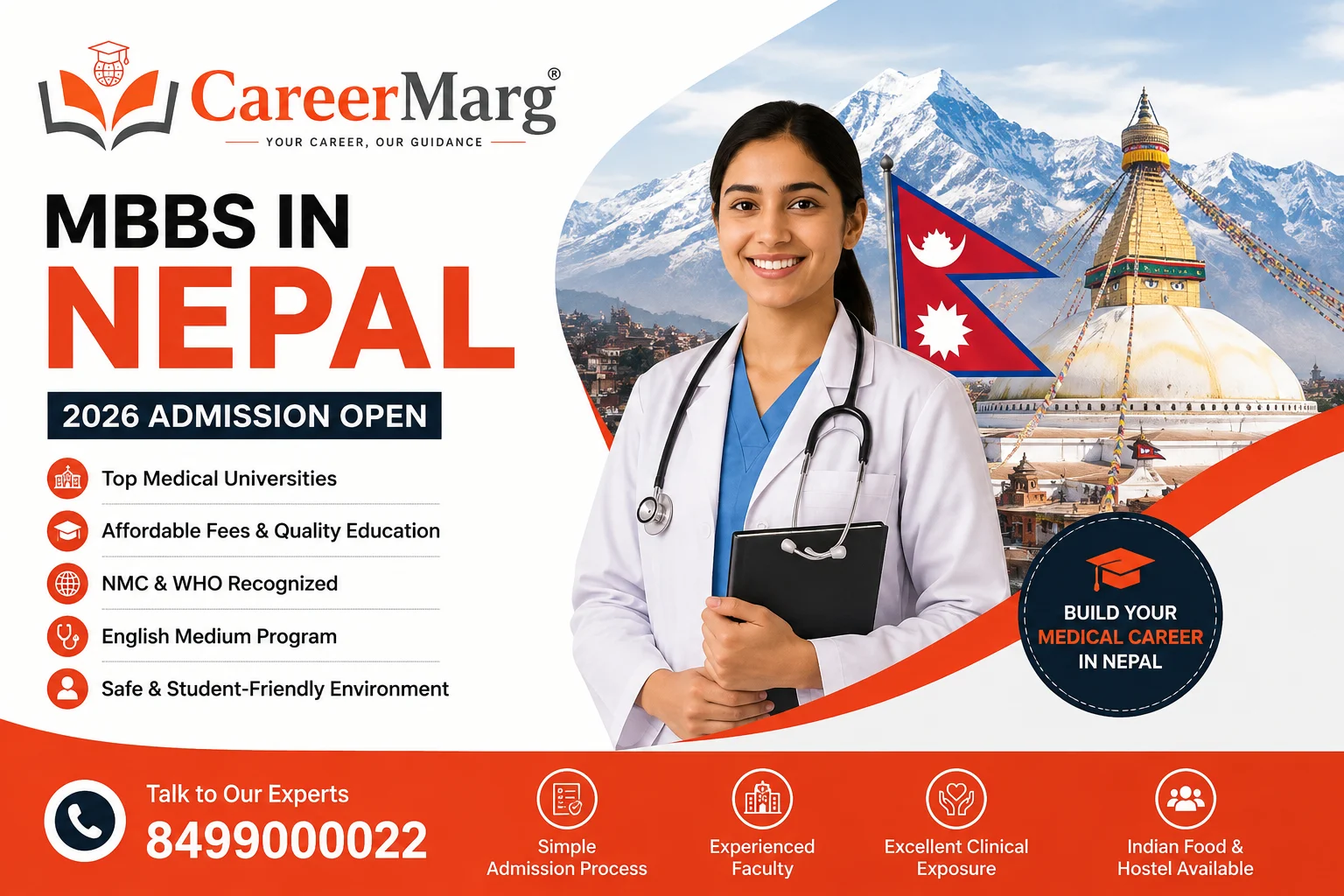
MBBS in Nepal

MBBS in Nepal Expert Guidance With CareerMarg

For Indian students looking for a recognized, affordable, and high-quality medical education abroad, MBBS in Nepal has become one of the most preferred destinations. Nepal offers NMC-approved medical colleges, English-medium MBBS programs, extensive clinical training in affiliated teaching hospitals, and a curriculum that closely aligns with India's medical education system. These advantages make it easier for students to adapt academically while building the knowledge and clinical skills required for a successful medical career.

Unlike many other countries, Nepal provides a familiar learning environment with similar disease patterns, cultural compatibility, convenient travel from India, and no student visa requirement for Indian citizens. Medical universities emphasize competency-based education through classroom learning, laboratory training, early clinical exposure, and supervised internship, helping students develop strong practical and diagnostic skills throughout the course.

Choosing the right medical college involves much more than comparing tuition fees. Students should carefully evaluate factors such as NMC recognition, university affiliation, admission requirements, curriculum, clinical exposure, internship opportunities, teaching hospital quality, licensing eligibility, and long-term career prospects before making a decision.

Whether your goal is to study at a government or private medical college, prepare for medical licensing in India, or build a successful career as a doctor, selecting the right institution is the first step toward achieving that goal. With proper planning and verified information, MBBS in Nepal can be an excellent pathway to earning an internationally recognized medical degree while studying in an academically and culturally familiar environment.

Table of Contents

    Why is MBBS in Nepal Becoming the First Choice for Indian Students?

    For Indian medical aspirants who are unable to secure a government MBBS seat yet want a recognized and high-quality medical education, Nepal has emerged as one of the strongest alternatives. The country's medical education system combines affordability, academic excellence, and practical clinical learning while maintaining standards that closely resemble India's healthcare education model.

    Several factors contribute to Nepal's growing popularity among Indian students:

    • NMC-approved medical colleges
    • English-medium curriculum
    • Similar disease patterns to India
    • Extensive hospital-based clinical training
    • Affordable tuition fees
    • No visa requirement for Indian citizens
    • Easy travel from India
    • Familiar culture and food
    • Globally recognized medical degree
    • Better academic adaptability for Indian students

    These advantages make Nepal not only a convenient destination but also an academically reliable choice for students planning to practice medicine in India or pursue higher education internationally.

    MBBS in Nepal 2026 at a Glance

    ParticularDetails
    CourseBachelor of Medicine & Bachelor of Surgery (MBBS)        
     
    CountryNepal
    CapitalKathmandu
    Course Duration5.5 Years (4.5 Years Academic + 1 Year Internship)
    Medium of InstructionEnglish
    Eligibility10+2 with Physics, Chemistry & Biology + NEET Qualification
    Minimum PCB Marks50% (General Category)
    NEET RequirementMandatory for Indian Students
    IELTS / TOEFLNot Required
    Total Medical Colleges20+
    NMC RecognitionYes
    WHO RecognitionListed in the World Directory of Medical Schools (WDOMS)
    Degree ValidityRecognized for medical registration in India subject to applicable NMC regulations and fulfillment of prevailing licensing requirements.
    Average Tuition Fees₹45 Lakhs – ₹65 Lakhs
    Hostel Facility Available
    FoodIndian Food Available in Most Colleges
    Visa RequirementNot Required for Indian Citizens
    CurrencyNepalese Rupee (NPR)
    Living Expenses₹10,000–₹20,000 per month
    Admission IntakeGenerally One Intake per Academic Year

    Quick Highlights of MBBS in Nepal

    If you're looking for a destination that combines affordability with quality medical education, Nepal offers several practical advantages for Indian students.

    Course Duration

    The MBBS program in Nepal is completed in 5.5 years, including one year of compulsory clinical internship.

    Medium of Teaching

    Medical education is delivered entirely in English, eliminating language-related academic challenges for Indian students.

    Affordable Medical Education

    Compared to many private medical colleges in India, Nepal provides quality medical education at a comparatively affordable tuition fee.

    NMC-Approved Universities

    Most reputed medical colleges in Nepal are recognized by the National Medical Commission, enabling eligible graduates to pursue medical licensing in India under applicable regulations.

    Strong Clinical Exposure

    Students begin clinical learning early through affiliated teaching hospitals with significant patient inflow, helping them build practical medical skills throughout the course.

    No Student Visa Requirement

    Indian citizens do not require a student visa for pursuing MBBS in Nepal, making the admission process simpler than many other international destinations.

    Similar Curriculum to India

    The medical curriculum closely follows Indian medical education standards, making it easier for students to prepare for FMGE/NExT and postgraduate entrance examinations.

    Comfortable Student Life

    The cultural environment, food habits, festivals, and climate are familiar to Indian students, helping them adjust quickly to campus life.

    Who Should Choose MBBS in Nepal?

    Studying medicine in Nepal is particularly suitable for students who:

    • Have qualified NEET and are seeking admission to an NMC-approved medical college.
    • Want a medical curriculum that closely resembles the Indian education system.
    • Prefer English-medium medical education.        
      Are looking for affordable alternatives to private medical colleges in India.
    • Want strong clinical exposure through teaching hospitals.
    • Prefer studying in a culturally familiar environment.                        
      Wish to stay close to India for easier travel and family accessibility.
    • Plan to appear for FMGE/NExT after graduation.
    • Intend to pursue postgraduate medical education in India or abroad after completing MBBS.

    For students who prioritize academic quality, practical clinical training, affordability, and long-term career opportunities, Nepal continues to remain one of the most balanced and dependable destinations for medical education abroad.

    Academic Strengths of Nepal's Medical Education System

    Nepal has earned a strong reputation for medical education by maintaining a structured academic framework, transparent admission procedures, and competency-based clinical training. Medical universities focus on developing knowledgeable, ethical, and clinically competent doctors through a curriculum that combines classroom learning with extensive hands-on experience.

    The country's medical education system is regulated by the Medical Education Commission (MEC), which standardizes admission procedures, academic quality, and institutional compliance. This centralized approach helps ensure consistency in medical education across participating universities and colleges.

    Standardized Admission Through the Medical Education Commission (MEC)

    One of the key strengths of Nepal's medical education system is its transparent and merit-based admission process. For institutions that participate in the national admission framework, the Medical Education Commission (MEC) conducts the Medical Education Common Entrance Examination (MECEE-BL) to evaluate applicants using a standardized assessment process.

    The entrance examination generally includes:

    • 200 Multiple Choice Questions (MCQs)
    • Physics, Chemistry, Biology, and Mental Ability
    • Three-hour examination duration
    • Merit-based counselling and seat allocation
    • Standardized evaluation criteria across participating institutions

    This structured admission system helps ensure that students admitted to medical programs possess the academic foundation required for rigorous medical training.

    Competency-Based MBBS Curriculum

    The MBBS curriculum in Nepal follows a progressive learning model that builds medical knowledge and clinical competence in a systematic manner. Students move through different stages of medical education, beginning with foundational sciences before advancing to clinical disciplines and supervised hospital training.

    The curriculum generally includes:

    • Basic Medical Sciences
    • Para-Clinical Subjects
    • Clinical Medicine
    • Community Medicine
    • Clinical Rotations
    • One-Year Compulsory Internship

    Rather than relying solely on theoretical instruction, universities integrate laboratory sessions, case-based discussions, clinical demonstrations, and hospital postings throughout the course. This approach helps students connect medical concepts with real-world patient care.

    Early Clinical Training and Hospital-Based Learning

    Practical exposure is an essential component of medical education in Nepal. Most teaching hospitals introduce students to clinical environments early in the program, allowing them to observe experienced clinicians and gradually participate in supervised patient care.

    During clinical training, students typically gain exposure to departments such as:

    • General Medicine
    • General Surgery
    • Pediatrics
    • Obstetrics and Gynecology
    • Orthopedics
    • Psychiatry
    • Emergency Medicine
    • Community Health
    • Intensive Care Units (ICU)
    • Operation Theatres (OT)

    Regular interaction with patients helps students develop confidence, professionalism, clinical judgment, and effective communication skills before graduation.

    Practical Skills Developed During MBBS

    Modern medical education emphasizes competency alongside theoretical knowledge. Medical colleges in Nepal encourage students to develop practical abilities that are essential for medical practice and postgraduate training.

    Throughout the course, students strengthen skills such as:

    • Clinical reasoning and problem-solving
    • Patient history taking
    • Physical examination techniques
    • Diagnostic interpretation
    • Evidence-based clinical decision-making
    • Case presentation and documentation
    • Patient counselling and communication
    • Professional ethics
    • Team-based healthcare practices

    These competencies prepare graduates for internships, licensing examinations, postgraduate education, and professional medical practice.

    Why Indian Students Adapt Quickly to Nepal's Medical Education System

    For many Indian students, one of the biggest advantages of studying in Nepal is the familiarity of the academic and clinical environment. The transition into medical education is often smoother because the healthcare setting shares many similarities with India.

    Students commonly benefit from:

    • Comparable disease patterns and clinical case presentations
    • Similar patient demographics
    • Familiar medical terminology and teaching methodology
    • English as the primary language of instruction
    • Clinical practices that closely resemble Indian healthcare settings

    This familiarity allows students to focus more on academic learning and practical skill development rather than adjusting to an entirely different education system.

    Preparation for FMGE and NExT

    Many Indian students consider future licensing requirements when selecting a destination for medical education abroad. Nepal's structured curriculum, hospital-based clinical training, and patient exposure provide a solid academic foundation for graduates preparing for licensing examinations such as the Foreign Medical Graduate Examination (FMGE) or the National Exit Test (NExT), subject to the prevailing regulations in India.

    It is important to note that success in these examinations depends on multiple factors, including the quality of individual preparation, consistent study habits, clinical understanding, and practical application of medical knowledge throughout the MBBS program.

    Insights from Student Counselling Experience

    Based on counselling experience and feedback from students over recent admission cycles, many Indian applicants find it easier to adjust academically in Nepal compared with destinations that involve significant language, curriculum, or cultural differences.

    Students frequently highlight benefits such as:

    • Faster academic adaptation
    • Comfortable classroom environment
    • Better communication during clinical postings
    • Easier understanding of medical concepts
    • Familiar healthcare ecosystem
    • Smooth transition into hospital-based learning

    While every student's experience depends on personal commitment, university selection, and academic performance, these factors continue to make Nepal a preferred destination for Indian medical aspirants seeking a balanced combination of quality education and practical clinical training.

    Nepal MBBS Seat Matrix 2026: College-Wise MBBS Seats for Indian Students

    The MBBS seat matrix in Nepal is one of the most important factors Indian students should evaluate before applying for admission. While tuition fees and university rankings often receive significant attention, understanding the total MBBS seats, foreign quota availability, and college-wise seat distribution can help you make a more informed admission decision.

    For the 2026 academic session, Nepal offers approximately 2,635 MBBS seats across 27 government and private medical colleges. Out of these, around 749 seats are reserved for international students under the foreign quota, creating excellent opportunities for NEET-qualified Indian students seeking admission to NMC-recognized medical colleges.

    Seat allocation is governed by the Medical Education Commission (MEC) and the respective universities, following applicable admission guidelines and merit-based procedures. Since the availability of foreign quota seats differs across institutions, students should compare colleges carefully and prepare multiple admission preferences rather than relying on a single option.

    Nepal MBBS Seat Distribution 2026 – Overview

    ParticularDetails
    Total Medical Colleges27
    Government / Public Medical Colleges10
    Private Medical Colleges17
    Total MBBS SeatsApproximately 2,635
    Foreign Quota SeatsApproximately 749
    Admission AuthorityMedical Education Commission (MEC) & Concerned Universities
    Eligibility for Indian StudentsNEET Qualification Mandatory (as per applicable NMC regulations)
    Seat AllocationMerit-Based as per MEC and University Guidelines

    College-Wise MBBS Seat Matrix in Nepal 2026

    S.No. Medical CollegeTypeUniversityTotal SeatsForeign Seats
    1B.P. Koirala Institute of Health Sciences, DharanPublicBPKIHS1009
    2Karnali Academy of Health Sciences, JumlaPublicKAHS505
    3Madan Bhandari Academy of Health SciencesPublicMBAHS504
    4Madhesh Institute of Health SciencesPublicMIHS504
    5Maharajgunj Medical CampusPublicTU1009
    6Nepalese Army Institute of Health SciencesPublicTU1004
    7Patan Academy of Health SciencesPublicPAHS656
    8Pokhara Academy of Health SciencesPublicPKRHS504
    9Purbanchal University School of Health SciencesPublicPU504
    10Rapti Academy of Health SciencesPublicRAHS504
    11B & C Medical CollegePrivateKU6020
    12Birat Medical CollegePrivateKU13043
    13Chitwan Medical CollegePrivateTU13043
    14College of Medical SciencesPrivateKU13065
    15Devdaha Medical CollegePrivateKU9030
    16Gandaki Medical CollegePrivate TU12040
    17Janaki Medical CollegePrivateTU6020
    18Kathmandu Medical CollegePrivateKU13043
    19Kathmandu University School of Medical SciencesPrivateKU13043
    20KIST Medical CollegePrivateTU12040
    21Lumbini Medical CollegePrivateKU12040
    22Manipal College of Medical SciencesPrivateKU12060
    23National Medical CollegePrivateTU12040
    24Nepal Medical CollegePrivateKU13043
    25Nepalgunj Medical CollegePrivateKU13043
    26Nobel Medical CollegePrivateKU13043
    27Universal College of Medical SciencesPrivateTU12040

    Total MBBS Seats: 2,635        
    Foreign Quota Seats: 749

    Analysis of the Nepal MBBS Seat Matrix

    The 2026 MBBS seat matrix highlights that Nepal offers a balanced mix of government and private medical colleges, providing multiple admission pathways for Indian students.

    Government medical colleges generally have fewer seats available under the foreign quota and are highly competitive because of their limited intake. In contrast, private medical colleges offer a larger number of seats for international students, giving applicants greater flexibility when selecting a college based on their NEET score, budget, preferred university affiliation, and career goals.

    Understanding this distribution enables students to prepare a realistic admission strategy and improve their chances of securing a seat at a suitable institution.

    Government vs Private Medical Colleges in Nepal: Which Option Is Better?

    Both government and private medical colleges in Nepal provide quality medical education, experienced faculty, and clinical training. However, they differ in terms of seat availability, tuition fees, and admission competition.

    ParameterGovernment Medical CollegesPrivate Medical Colleges
    Number of Colleges1017
    Admission CompetitionVery HighModerate to High
    Foreign Quota SeatsLimitedComparatively Higher
    Tuition FeesLowerHigher
    Clinical ExposureExcellentExcellent
    InfrastructureWell EstablishedModern & Well Equipped
    Admission ProcessMEC-BasedMEC / University Guidelines

    Students with higher merit may prefer government medical colleges, while private institutions provide a wider range of options for Indian students looking for quality education and comparatively greater foreign seat availability.

    Medical Colleges with the Highest Foreign Quota Seats in Nepal

    Students seeking better admission opportunities often prioritize medical colleges that offer a larger number of foreign quota seats.

    Medical CollegeForeign Quota Seats
    College of Medical Sciences65
    Manipal College of Medical Sciences60
    Birat Medical College43
    Kathmandu Medical College43
    Kathmandu University School of Medical Sciences43
    Nepal Medical College43
    Nepalgunj Medical College43
    Nobel Medical College43
    Chitwan Medical College43

    These colleges are among the preferred choices for Indian students because they combine comparatively higher foreign-seat availability with established teaching hospitals, experienced faculty, and strong clinical training.

    How to Choose the Right Medical College in Nepal

    Selecting the right medical college involves more than comparing tuition fees. A well-informed decision should consider multiple academic and practical factors that influence your overall learning experience and future career.

    Before applying, compare each college based on:

    • University affiliation and academic reputation
    • NMC recognition and regulatory compliance
    • Availability of foreign quota seats
    • Quality of teaching hospitals and clinical exposure
    • Faculty experience and academic environment
    • Tuition fees and overall cost of education
    • Hostel facilities and campus infrastructure
    • City, connectivity, and accessibility
    • Internship opportunities and patient inflow
    • Student support services and overall campus         
      experience

    Evaluating these factors together helps you shortlist colleges that align with your academic goals, financial planning, and long-term career aspirations.

    Expert Tip for Indian Students

    Choosing a medical college solely on the basis of tuition fees or popularity can limit your options. Instead, prepare a well-balanced preference list by evaluating each institution's academic quality, university affiliation, clinical training opportunities, teaching hospital infrastructure, foreign quota availability, hostel facilities, and overall learning environment.

    Applying to multiple suitable colleges based on your NEET score, budget, and career objectives can significantly improve your chances of securing admission to an NMC-recognized medical college in Nepal.

    MBBS in Nepal Fees 2026–27: Complete College-Wise Fee

    Understanding the MBBS in Nepal fee structure is an important part of planning your medical education abroad. While tuition fees are a major consideration, students should also account for hostel accommodation, living expenses, university charges, examination fees, and other institutional costs to estimate the overall investment accurately.

    For the 2026–27 academic session, the total tuition fee for most private medical colleges in Nepal generally ranges from ₹45 lakh to ₹65 lakh, while certain government and autonomous institutions follow fee structures prescribed by the Medical Education Commission (MEC) in USD or Nepalese Rupees (NPR).

    One of the key advantages for Indian students is the transparent fee structure followed by most medical colleges. Compared with many international destinations, Nepal offers a predictable cost of education with comparatively lower living expenses and convenient access from India, making financial planning easier for students and parents.

    Before confirming admission, students should always obtain the latest official fee schedule from their chosen medical college, as tuition fees, exchange rates, and institutional charges may change for each admission session.

    MBBS in Nepal Fee Structure 2026–27: Cost Overview 

    ParticularApproximate Cost
    Total Tuition Fee₹45 Lakhs – ₹65 Lakhs
    Hostel Charges₹80,000 – ₹2,00,000 per year
    Food Expenses₹4,000 – ₹8,000 per month
    Living Expenses ₹10,000 – ₹20,000 per month
    University Registration FeeAs per University Norms
    Examination FeesAs Applicable
    Medical InsuranceAs per Institution
    Estimated Total Cost₹50 Lakhs – ₹70 Lakhs

    Expert Tip: Always compare the total cost of attendance, not just tuition fees. Hostel charges, university registration, examination fees, food, transportation, and personal expenses contribute to the overall cost of studying MBBS in Nepal.

    College-Wise MBBS Fees in Nepal for Indian Students (2026–27)

    Medical CollegeTotal Tuition FeeFirst-Year Fee
    Janaki Medical College₹46,00,000₹23,00,000
    KIST Medical College₹48,00,000₹24,00,000
    Gandaki Medical College₹50,00,000₹25,00,000
    Nepal Medical College₹52,00,000₹26,00,000
    Chitwan Medical College₹52,00,000₹26,00,000
    Devdaha Medical College₹52,00,000₹25,00,000
    Birat Medical College₹53,00,000₹27,00,000
    Lumbini Medical College₹53,00,000₹27,00,000
    Kathmandu Medical College₹54,00,000₹27,00,000
    Nobel Medical College₹56,00,000₹28,00,000
    College of Medical Sciences₹58,00,000₹30,00,000
    Universal College of Medical Sciences₹58,00,000₹28,00,000
    Nepalgunj Medical College₹60,00,000₹30,00,000
    National Medical College₹62,50,000₹32,00,000
    Manipal College of Medical Sciences₹75,00,000₹37,50,000

    Note: The above fee structure is indicative for the 2026–27 admission session and may vary based on university notifications, exchange rates, regulatory guidelines, and institutional policies. Students should verify the latest official fee schedule before making any payment.       


    Nepal MBBS Entrance Exam (MECEE-BL) 2026

    For Indian students planning to study MBBS in Nepal, understanding the admission process is essential before applying. Most government medical colleges and several university-affiliated institutions conduct admissions through the Medical Education Common Entrance Examination (MECEE-BL), administered by Nepal's Medical Education Commission (MEC). Some private medical colleges may also admit eligible international students under institutional admission policies, subject to the latest MEC regulations.

    The MECEE-BL examination is designed to assess conceptual understanding rather than rote memorization. It evaluates a student's knowledge of higher secondary science subjects along with logical reasoning and analytical ability, ensuring that candidates possess the academic foundation required for medical education.

    Before applying, Indian students should always verify the latest admission guidelines issued by the Medical Education Commission (MEC) and the respective university, as eligibility criteria and admission procedures may change from time to time.

    MECEE-BL Exam Highlights

    ParticularDetails
    ExaminationMedical Education Common Entrance Examination (MECEE-BL)
    Conducting AuthorityMedical Education Commission (MEC), Nepal
    Exam ModeComputer-Based / As notified by MEC
    Question TypeMultiple Choice Questions (MCQs)
    Total Questions200
    Total Marks200
    Duration3 Hours
    Medium of ExaminationEnglish
    Subjects CoveredPhysics, Chemistry, Botany, Zoology & Mental Ability
    Negative MarkingAs per latest MEC guidelines

    Subject-Wise Marks Distribution

    SubjectMarks
    Physics50
    Chemistry50
    Botany40
    Zoology40
    Mental Ability20
    Total200

    MECEE-BL Syllabus Overview

    The syllabus is primarily based on the higher secondary (10+2) science curriculum and focuses on conceptual learning.

    Physics

    • Mechanics
    • Thermodynamics
    • Electricity & Magnetism
    • Optics
    • Modern Physics
    • Electronics

    Chemistry

    • Physical Chemistry
    • Organic Chemistry
    • Inorganic Chemistry

    Botany

    • Cell Biology
    • Plant Diversity
    • Genetics
    • Plant Physiology
    • Ecology
    • Biodiversity
    • Applied Botany

    Zoology

    • Animal Diversity
    • Human Biology
    • Human Physiology
    • Human Diseases
    • Evolution
    • Ecology

    Mental Ability

    • Logical Reasoning
    • Analytical Thinking
    • Numerical Ability
    • Verbal Reasoning
    • Abstract Reasoning

    Preparing thoroughly across all subjects while strengthening analytical thinking significantly improves the chances of securing admission to reputed medical colleges in Nepal.

    Documents Required for MBBS Admission in Nepal

    Preparing all necessary documents in advance helps ensure a smooth admission process. Students should keep both original documents and multiple photocopies ready for verification.

    Academic Documents

    • Class 10 Mark Sheet
    • Class 10 Passing Certificate
    • Class 12 Mark Sheet
    • Class 12 Passing Certificate
    • Migration Certificate (if applicable)
    • Transfer Certificate
    • Character Certificate

    Entrance Examination Documents

    • NEET Admit Card
    • NEET Score Card
    • MECEE-BL Admit Card (if applicable)
    • MECEE-BL Score Card (if applicable)

    Identity Documents

    • Valid Passport or Aadhaar Card
    • Recent Passport-size Photographs

    Additional Documents

    • Completed Admission Application Form
    • Fee Payment Receipt
    • Medical Fitness Certificate (if required)
    • Any additional documents requested by the Medical Education Commission (MEC) or the respective university

    Students should always verify the latest document checklist issued by their chosen medical college before submitting the application.

    MBBS Course Structure in Nepal 2026

    The MBBS curriculum in Nepal is designed to develop competent and ethically responsible medical professionals through a balanced combination of classroom learning, laboratory training, clinical exposure, and a compulsory rotatory internship. Medical universities follow a competency-based approach that gradually progresses from foundational medical sciences to advanced clinical practice, enabling students to develop strong theoretical knowledge alongside practical clinical skills.

    One of the biggest strengths of medical education in Nepal is its emphasis on early clinical exposure. Students begin interacting with patients and healthcare professionals from the early years of the program through affiliated teaching hospitals. This practical learning environment helps them build confidence in diagnosis, communication, patient management, and evidence-based clinical decision-making throughout the course.

    For Indian students, another major advantage is that the curriculum closely resembles the medical education framework followed in India. Since the entire program is delivered in English and focuses on similar disease patterns and healthcare practices, many students find it easier to adapt academically and prepare for licensing examinations such as FMGE or NExT, subject to the applicable National Medical Commission (NMC) regulations.

    MBBS Course Duration in Nepal

    The MBBS program in Nepal has a total duration of 5.5 years, including academic study and a compulsory one-year rotatory internship.

    Course ComponentDuration
    Academic Study4.5 Years
    Compulsory Rotatory Internship1 Year
    Total Course Duration5.5 Years

    The internship forms an integral part of the MBBS curriculum and provides supervised practical training across major clinical departments. During this period, students gain hands-on experience in patient care, emergency medicine, diagnosis, and hospital procedures under the guidance of experienced medical professionals.

    Year-Wise MBBS Curriculum in Nepal

    The curriculum is systematically designed to help students progress from basic medical sciences to advanced clinical medicine.

    Academic YearMajor Subjects
    First YearAnatomy, Physiology, Biochemistry, Community Medicine, Communication Skills, Early Clinical Exposure
    Second YearPathology, Pharmacology, Microbiology, Forensic Medicine, Community Medicine
    Third YearGeneral Medicine, General Surgery, Pediatrics, Obstetrics & Gynecology, ENT, Ophthalmology
    Fourth YearInternal Medicine, Surgery, Orthopedics, Psychiatry, Dermatology, Radiology, Emergency Medicine, Anesthesiology
    InternshipRotational Clinical Training Across Major Medical Departments

    This structured progression enables students to build strong medical fundamentals before moving into advanced diagnosis, patient management, and clinical practice.

    Clinical Training During MBBS in Nepal

    Clinical exposure is one of the most important factors when choosing a medical college abroad. Nepal is widely recognized for providing extensive hospital-based training through affiliated multispecialty teaching hospitals with significant patient inflow.

    Unlike programs that focus primarily on classroom instruction during the early years, many Nepalese medical colleges integrate practical learning from the beginning of the course. Students regularly observe patient consultations, ward rounds, case discussions, bedside teaching, and clinical demonstrations, allowing them to connect theoretical concepts with real-world medical practice.

    During clinical postings, students typically receive training in:

    • General Medicine
    • General Surgery
    • Pediatrics
    • Obstetrics & Gynecology
    • Orthopedics
    • Emergency Medicine
    • Psychiatry
    • Dermatology
    • ENT
    • Ophthalmology
    • Community Medicine
    • Intensive Care Units (ICUs)
    • Operation Theatres (OTs)
    • Outpatient Departments (OPDs)
    • Diagnostic Laboratories

    High patient inflow enables students to encounter a wide variety of clinical cases, strengthening their diagnostic reasoning, communication skills, procedural knowledge, and confidence in managing patients.

    Teaching Methodology in Nepal Medical Colleges

    Medical universities in Nepal increasingly follow modern competency-based teaching practices that emphasize conceptual understanding, practical application, professional ethics, and evidence-based medicine.

    Rather than relying solely on traditional lectures, institutions adopt multiple learning approaches to ensure comprehensive medical training.

    Common teaching methods include:

    • Interactive classroom lectures
    • Practical laboratory sessions
    • Anatomy dissection
    • Clinical demonstrations
    • Bedside teaching
    • Small-group discussions
    • Case-based learning
    • Problem-based learning
    • Simulation-based medical training
    • Seminars and academic presentations
    • Clinical skill workshops
    • Research-oriented projects
    • Community health postings
    • Continuous internal assessments

    This integrated academic model encourages active participation, critical thinking, teamwork, and lifelong learning—skills that are essential for modern medical professionals.

    Why Nepal's MBBS Curriculum Benefits Indian Students

    One of the key reasons why Nepal has become a preferred destination for Indian medical aspirants is the close similarity between the two countries' medical education systems.

    Some of the major academic advantages include:

    • Curriculum closely aligned with India's medical education framework
    • English-medium instruction throughout the course
    • Similar disease patterns and healthcare challenges
    • Competency-based medical education
    • Strong emphasis on clinical learning
    • Teaching hospitals with high patient inflow
    • Practical bedside training from the early years
    • Structured internship integrated into the curriculum
    • Easier academic adaptation for Indian students
    • Better preparation for future licensing examinations under applicable regulations

    These similarities reduce the learning curve for Indian students while helping them develop the clinical competence required for postgraduate education and professional practice.

    Key Takeaways

    Choosing the right medical college involves more than comparing tuition fees. Students should evaluate curriculum quality, teaching methodology, hospital infrastructure, clinical exposure, faculty expertise, internship opportunities, and university recognition before making a final decision.

    Nepal's MBBS program offers a balanced combination of strong academics, practical clinical training, English-medium education, and competency-based learning. Combined with cultural familiarity, geographical proximity to India, and NMC-recognized medical colleges, these factors make Nepal one of the most reliable destinations for Indian students pursuing MBBS abroad.

    Before applying, always verify the latest admission guidelines, eligibility criteria, fee structure, curriculum updates, internship policies, and NMC recognition status directly through the Medical Education Commission (MEC) and your preferred medical university to ensure compliance with the latest regulations.

    Student Life in Nepal for Indian MBBS Students

    Studying MBBS in Nepal is not only about earning a medical degree—it is also about living in an environment that supports academic excellence, personal growth, and professional development. Nepal has become one of the most preferred destinations for Indian students because of its cultural familiarity, affordable lifestyle, English-medium education, and student-friendly atmosphere.

    Unlike many other countries where international students require significant cultural adjustment, Nepal offers a comfortable environment with familiar food, traditions, language, and healthcare practices. These similarities help students settle quickly, reduce homesickness, and focus on academics from the beginning of the MBBS program.

    Most reputed medical colleges provide well-developed campuses equipped with teaching hospitals, modern laboratories, libraries, digital learning facilities, hostel accommodation, sports complexes, and recreational spaces that support both academic and extracurricular activities.

    Hostel Facilities in Nepal Medical Colleges

    Most NMC-recognized medical colleges in Nepal offer separate hostel accommodation for male and female students either within the campus or nearby. Hostel facilities are designed to provide a safe, comfortable, and academically supportive environment for international students.

    Common hostel amenities include:

    Fully furnished single, double, or shared rooms

    Separate hostels for boys and girls

    24×7 security and CCTV surveillance

    Hostel wardens and student support staff

    Wi-Fi and high-speed internet connectivity

    Reading rooms and study halls

    Recreation and common rooms

    Laundry facilities

    Power backup

    Hot water supply

    Clean drinking water

    Housekeeping services

    Hostel facilities may vary from one institution to another. Before confirming admission, students should verify room availability, hostel fees, and facilities directly with the respective medical college.

    Food & Mess Facilities

    Food is rarely a concern for Indian students studying in Nepal. Most medical colleges operate hostel mess facilities serving hygienic and nutritious meals, while nearby restaurants and grocery stores offer a wide variety of Indian cuisine.

    Students generally have access to:

    North Indian meals

    South Indian meals

    Vegetarian food

    Non-vegetarian meals

    Jain food (available at selected institutions)

    Fresh fruits and dairy products

    Local Nepalese cuisine

    Cafeterias and food courts near campuses

    Because of the cultural similarities between India and Nepal, students can easily maintain their regular dietary habits throughout the course.

    Cost of Living in Nepal for Indian Students

    Apart from tuition fees, students should also budget for accommodation, food, transportation, communication, and personal expenses. Nepal is generally considered one of the most affordable countries for pursuing MBBS abroad.

    Estimated Monthly Living Expenses

    ExpenseEstimated Cost
    Food & Mess₹4,000–₹8,000
    Transportation₹1,000–₹2,000
    Internet & Mobile₹500–₹1,000
    Personal Expenses₹3,000–₹6,000
    Estimated Monthly Living Cost₹10,000–₹20,000

    Living expenses may be slightly higher in cities such as Kathmandu compared to smaller cities like Chitwan or Biratnagar. Individual spending habits and accommodation choices also influence the overall monthly budget.

    Scholarships for MBBS in Nepal

    Scholarship opportunities for MBBS students in Nepal are comparatively limited but may be available through government initiatives, universities, and institutional merit-based programs.

    Scholarships are generally awarded based on:

    Academic merit

    Entrance examination performance

    Government scholarship schemes

    Institutional scholarship programs

    Financial need (where applicable)

    Eligibility criteria, availability, and scholarship amounts vary among universities. Students should always verify the latest scholarship information directly from the respective medical college before applying.

    Is Nepal Safe for Indian Students?

    Yes. Nepal is widely regarded as one of the safest and most welcoming destinations for Indian students pursuing medical education. The long-standing cultural relationship between India and Nepal, along with the presence of a large Indian student community, contributes to a secure and comfortable learning environment.

    Most reputed medical colleges provide:

    Secure campuses

    24×7 hostel security

    CCTV surveillance

    Hostel wardens

    Emergency support services

    Controlled campus entry

    Student counselling and assistance

    Students are nevertheless advised to follow general safety precautions, comply with university regulations, and maintain copies of important documents throughout their stay.

    Campus Life & Student Experience

    Medical education involves much more than classroom learning. Universities in Nepal encourage students to participate in extracurricular, academic, and community-based activities that contribute to holistic development.

    Students regularly participate in:

    Medical conferences

    Research workshops

    Scientific seminars

    Clinical skill competitions

    Cultural festivals

    Sports tournaments

    Community health camps

    Blood donation drives

    Awareness campaigns

    Student clubs and leadership activities

    These experiences help students develop communication skills, teamwork, leadership qualities, and professional confidence alongside their medical education.

    Weather & Climate in Nepal

    Nepal experiences diverse climatic conditions depending on altitude and region. Most medical colleges are located in areas with moderate weather that is comfortable for international students.

    SeasonClimate
    SummerPleasant to Warm
    MonsoonModerate Rainfall
    WinterCool to Cold (varies by region)

    Students studying in higher-altitude regions may experience colder winters, while most educational cities have a climate that remains manageable throughout the year.

    Healthcare & Medical Support

    Since most medical colleges are attached to multispecialty teaching hospitals, students have easy access to healthcare services whenever required.

    Common healthcare facilities include:

    Emergency medical services

    Outpatient departments (OPDs)

    Specialist consultations

    Diagnostic laboratories

    Pharmacy services

    Vaccination facilities

    Routine health check-ups

    Some institutions may also recommend medical insurance for international students.

    Internet & Communication

    Nepal offers reliable internet infrastructure that supports both academic learning and communication with family members.

    Students typically have access to:

    Campus-wide Wi-Fi

    High-speed mobile internet

    Online learning platforms

    Digital medical libraries

    Video conferencing tools

    E-learning resources

    Many Indian students prefer using local Nepalese SIM cards because they offer affordable data plans and good network coverage across major cities.

    Cultural Environment for Indian Students

    One of Nepal's greatest advantages is its cultural compatibility with India. Shared traditions, festivals, languages, food habits, and social customs create a welcoming environment that requires minimal cultural adjustment.

    Indian students generally benefit from:

    Similar food habits

    Familiar festivals and traditions

    Easy communication

    Comparable healthcare practices

    Friendly local communities

    Comfortable lifestyle

    Convenient travel between India and Nepal

    This familiarity enables students to settle quickly, remain focused on academics, and enjoy a balanced student life throughout the MBBS program.

    Expert Tip Before Choosing a Medical College

    Before confirming admission, compare colleges based on:

    NMC recognition

    University affiliation

    Teaching hospital quality

    Clinical exposure

    Faculty experience

    Hostel facilities

    Tuition fees

    Internship opportunities

    Student support services

    Campus safety

    Location and accessibility

    Making an informed comparison before admission helps students avoid unexpected challenges during their medical education.

    MBBS in Nepal vs Other Countries: Which Is the Better Choice for Indian Students?

    Selecting the right country for MBBS abroad involves much more than comparing tuition fees. Academic quality, university recognition, curriculum, clinical exposure, licensing eligibility, language, cultural adaptation, safety, living expenses, and long-term career prospects all play an equally important role.

    Among the most popular destinations for Indian students are Nepal, India, Bangladesh, Russia, Kazakhstan, and Georgia. While each country offers unique advantages, Nepal continues to attract thousands of Indian students because of its strong academic framework, practical clinical training, and close alignment with India's medical education system.

    The comparison below highlights the major differences across leading MBBS destinations.

    MBBS in Nepal vs MBBS in India

    Government medical colleges in India remain the most affordable option for students who secure admission through NEET counselling. However, due to limited seats and intense competition, many students consider studying abroad.

    Private medical colleges in India often charge significantly higher tuition fees. Nepal provides a practical alternative with comparable academic standards, English-medium instruction, and extensive clinical exposure.

    Nepal vs India Comparison

    ParameterNepalIndia
    Course Duration5.5 Years5.5 Years
    Medium of InstructionEnglishEnglish
    NEET RequirementMandatoryMandatory
    NMC RecognitionYes (Approved Colleges)Yes
    CurriculumSimilar to IndiaIndian Curriculum
    Clinical ExposureExcellentExcellent
    InternshipIncludedIncluded
    Tuition Fees₹45–65 LakhsGovernment: ₹1–10 Lakhs; Private: ₹60 Lakhs–₹1.5+ Crore
    VisaNot RequiredNot Applicable
    Cultural AdaptationVery EasyNative Environment

    Key Takeaway: Government MBBS in India remains the best option for students securing a government seat. However, Nepal offers significantly better value than many private medical colleges in India.

    MBBS in Nepal vs MBBS in Russia

    Russia has long been a preferred destination because of its large number of medical universities and relatively affordable tuition fees.

    However, students should also consider language requirements during clinical training, climatic conditions, and adaptation to a different healthcare system.

    ParameterNepalRussia
    Course Duration5.5 Years6 Years
    Language BarrierMinimalModerate
    Clinical ExposureHighVaries by University
    ClimateModerateExtremely Cold
    Curriculum SimilarityVery HighModerate
    VisaNot RequiredRequired
    Travel ConvenienceExcellentModerate

    Key Takeaway: Russia offers established universities, while Nepal provides easier adaptation, stronger curriculum alignment with India, and better familiarity with Indian healthcare practices.

    MBBS in Nepal vs MBBS in Bangladesh

    Bangladesh has a curriculum that closely resembles India's medical education system and offers excellent hospital-based training.

    ParameterNepalBangladesh
    CurriculumSimilar to IndiaSimilar to India
    Clinical ExposureExcellentExcellent
    MediumEnglishEnglish
    VisaNot RequiredRequired
    Cultural SimilarityVery HighHigh
    Travel ConvenienceExcellentGood

    Key Takeaway: Both countries provide excellent medical education, but Nepal offers additional convenience because Indian citizens do not require a student visa.

    MBBS in Nepal vs MBBS in Kazakhstan

    Kazakhstan attracts students because of comparatively lower tuition fees.

    ParameterNepalKazakhstan
    Course Duration5.5 Years5 Years + Internship
    Clinical ExposureHighModerate
    LanguageEnglishEnglish + Local Language
    ClimateModerateExtremely Cold
    Patient ExposureHighModerate
    VisaNot RequiredRequired

    Key Takeaway: Kazakhstan may reduce initial costs, while Nepal generally provides stronger clinical exposure, easier communication, and better curriculum alignment.

    MBBS in Nepal vs MBBS in Georgia

    Georgia has become popular because of its modern universities and international learning environment.

    ParameterNepalGeorgia
    Course Duration5.5 Years6 Years
    Tuition FeesModerateHigher
    Cost of LivingLowerHigher
    Clinical ExposureStrongGood
    VisaNot RequiredRequired
    Curriculum SimilarityHighModerate

    Key Takeaway: Georgia offers international exposure, whereas Nepal provides lower overall educational costs, easier travel, and greater familiarity for Indian students.

    Country-Wise MBBS Comparison for Indian Students

    ParameterNepalIndiaBangladeshRussiaKazakhstanGeorgia
    Course Duration5.5 Years5.5 Years5 Years + Internship6 Years5 Years + Internship6 Years
    MediumEnglishEnglishEnglishEnglishEnglishEnglish
    NMC-Approved CollegesYesYesYesYesYesYes
    Student Visa RequiredNoNoYesYesYesYes
    Clinical ExposureExcellentExcellentExcellentGoodModerateGood
    Curriculum Similarity to IndiaVery HighHighestVery HighModerateModerateModerate
    Language BarrierVery LowNoneLowModerateModerateLow
    Cost of LivingModerateModerateModerateModerateLowHigher
    Indian Food AvailabilityExcellentExcellentExcellentGoodModerateGood
    Travel ConvenienceExcellentExcellentGoodModerateModerateModerate

    Which Country Should You Choose?

    The ideal destination depends on your NEET score, budget, preferred university, and long-term career plans.

    If your priority is:

    Strong clinical exposure

    English-medium education

    Curriculum similar to India

    No student visa requirement

    Cultural familiarity

    High-quality teaching hospitals

    Easy travel from India

    then MBBS in Nepal remains one of the most balanced and practical choices for Indian students pursuing medical education abroad.

    Verified Student Reviews

    Real Student Reviews of CareerMarg's MBBS in Nepal Admission Guidance

    Read genuine experiences from students who received CareerMarg's MBBS in Nepal admission guidance and secured admission to NMC-approved medical colleges in Nepal.

    ★ ★ ★ ★ ★

    "Choosing MBBS in Nepal was the right decision for my medical education. CareerMarg explained the admission process, eligibility, college options, and fee structure in a clear and transparent manner. Their counsellors helped me select a recognized medical college that matched my academic goals and budget. From documentation to admission guidance, every step was well organized. I appreciate their professional support and would confidently recommend CareerMarg to students planning to study MBBS in Nepal."

    User

    Aman Kumar

    ★ ★ ★ ★ ★

    "I explored several countries before selecting MBBS in Nepal, and CareerMarg provided honest guidance throughout the admission journey. They explained university recognition, tuition fees, hostel facilities, and eligibility requirements without any hidden information. The admission process was smooth, and I received regular updates until I joined my university. Their experienced counselling team made every stage simple and stress-free. I highly recommend CareerMarg for students considering MBBS in Nepal."

    User

    Priya Sharma

    ★ ★ ★ ★ ★

    "My experience with CareerMarg during my MBBS in Nepal admission was excellent from beginning to end. Their team helped me compare medical colleges, understand the complete fee structure, and prepare all required documents on time. They answered every question patiently and guided me through each stage with transparency and professionalism. Thanks to their support, I am now studying at a recognized medical college in Nepal with complete confidence in my decision."

    User

    Rohit Verma

    FAQs

    Frequently Asked Questions

    Find answers to the most common questions about MBBS In Nepal admissions, eligibility, fees, universities, and the admission process.

    Yes. MBBS in Nepal is a preferred choice for Indian students because of its similar medical curriculum, English-medium education in many colleges, affordable tuition fees, quality clinical training, and cultural proximity. Many universities also meet the applicable NMC eligibility requirements for Indian students.

    The total cost of MBBS in Nepal generally ranges between ₹45 lakh and ₹70 lakh, including tuition fees and living expenses. The overall budget depends on the medical college, accommodation, and personal lifestyle.

    Yes. Indian students must qualify NEET-UG to study MBBS in Nepal and remain eligible to pursue medical licensing in India under the applicable NMC regulations.

    Students must generally have completed 10+2 with Physics, Chemistry, Biology, and English, secure at least 50% marks in PCB (40% for reserved categories where applicable), qualify NEET, and be 17 years or older at the time of admission.

    Yes. An MBBS degree from Nepal is valid for Indian students if it is obtained from an eligible university that complies with the applicable NMC regulations. Graduates must also fulfill the required medical licensing requirements in India.

    The MBBS course in Nepal generally takes 5.5 years, including academic study and a compulsory clinical internship, although the exact duration may vary by university.

    Some of the well-known medical colleges include B.P. Koirala Institute of Health Sciences, Kathmandu Medical College, Manipal College of Medical Sciences, Nepal Medical College, Nobel Medical College, and Universal College of Medical Sciences. Students should verify the latest eligibility and recognition status before applying.

    Yes. Indian students graduating from an eligible medical university in Nepal can practice in India after meeting the applicable National Medical Commission (NMC) regulations and qualifying the required licensing examination, where applicable.

    Yes. Nepal is considered one of the safest and most convenient destinations for Indian students. Most medical colleges provide secure hostel facilities, student support services, and easy access to Indian food.